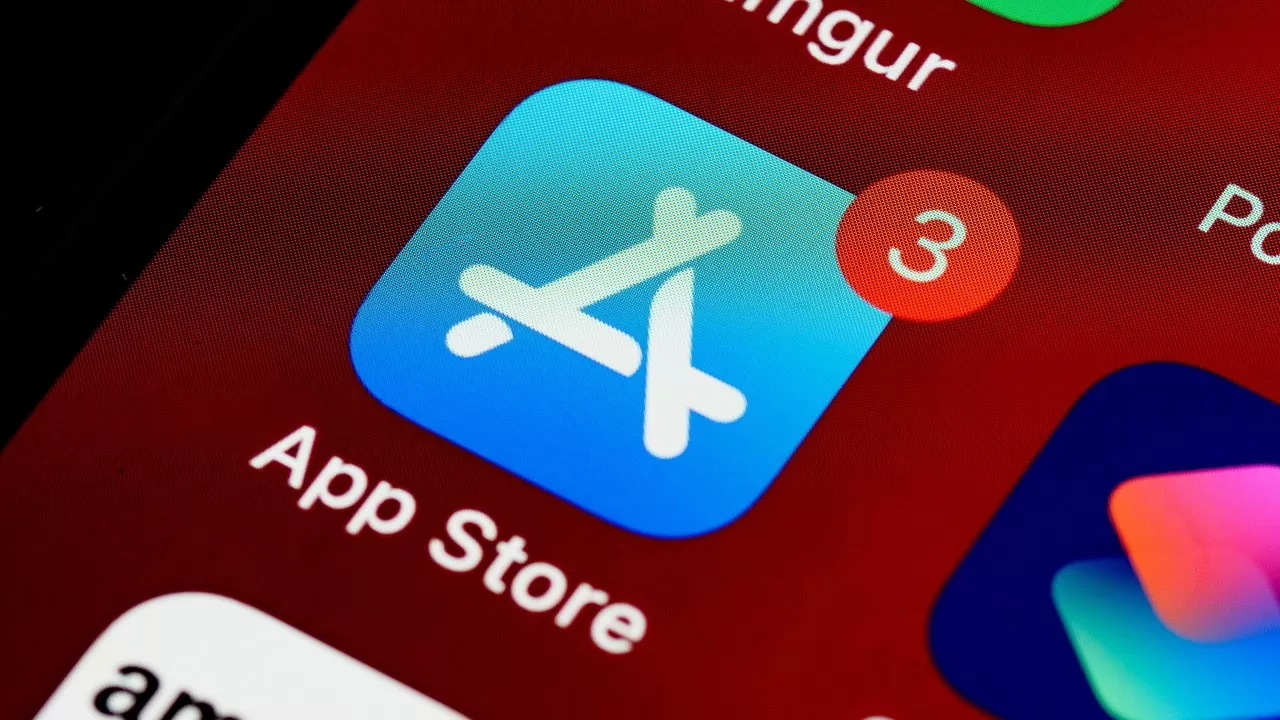
Apple doesn't even seem to be trying with App Store Review. Users should not be the ones who find problem apps, but over and over, that is what is happening.
No question, Apple has the resources to protect us from bad apps, and, no question, it keeps telling regulators that it has. As regulators around the world press for third-party firms to run iPhone App Stores, Apple consistently protests that only it can do a good job of keeping bad apps at bay.
It is absolutely true that if, or when, the door is open to rival App Stores, there will be a flood of apps that set out to defraud users. But if you're going to hold up the App Store Review process as the last thin line of defense, you have to make it work and Apple is repeatedly failing.
Staggering and repeated mistakes
In August 2026, after countries such as the UK outlawed "nudifying" apps, for instance, The Independent has found several still on the App Store. One unnamed example lets users upload images into scenes called "bedroom rape."
As keeps happening, Apple has now removed that app. But it passed App Store review and was only taken down when Apple was asked about it by that newspaper.
There are ways that developers can try skirting around the App Store Review process. They can, at least in theory, present an app that retrieves images and other assets from a website.
And then once the app is in the store, they can change those assets, or redirect the website. Apple would need to keep checking apps after they've passed the review process.
There are an incredible number of apps being submitted to the App Store every day, so periodic rechecking is time-consuming and expensive. But Apple cannot claim to be this protector of us all and then say except where it costs too much.
It appears, too, that in the case of that abhorrent "bedroom rape" app, Apple may have been able to catch it during the regular review process. That's because the listing for the app reportedly featured descriptions and even graphic videos.
If the developer originally listed the app with something innocuous, then surely it uploading anything else should have triggered a new review. Developers have legitimate reasons to update their listings, but those listings are hosted on Apple's servers so any change should be spotted and at least flagged for attention.
Gaming the system
There are too many apps being submitted and it's at least conceivably possible for developers to make certain changes after being accepted. But it really does not appear as if Apple's App Review team is doing its job.
For instance, long-time developer Jeff Johnson has detailed how he spotted and investigated a suspicious app. He dug into developer's company and checked the validity of cited reviews. There were obvious clues from the start.
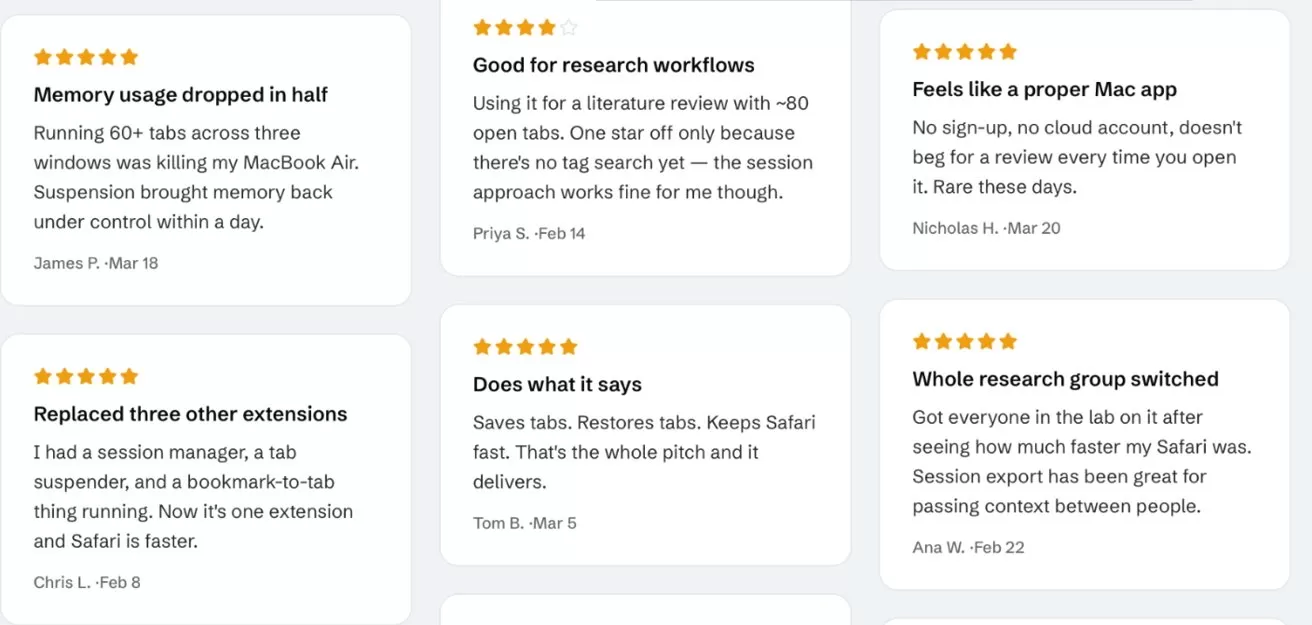
Five-star reviews purportedly from the App Store, but including dates months before the app was released. Image credit: Jeff Johnson.
Johnson has two Safari extensions in the Mac App Store, and noticed that the same section includes one with a 4.9 out of 5 star rating. However, TabControl, which is still available in the App Store, unquestionably was not showing a genuine App Store rating.
Instead, the whole "4.9" part was a banner in the poster image, it has nothing to do with the App Store. At time of writing, there is no genuine App Store rating.
"This app hasn't received enough ratings or reviews to display an overview," says the App Store listing.
That's a little odd when the app's official website says that the extension is currently being used by "5,000+ Safari users."
Johnson also found a number of purported App Store reviews listed on that site. These now appear to have been removed, but Johnson shows screengrabs including reviews that are dated from before the app was on the App Store.
"Do I expect Apple App Store review to do the research that I've done in this blog post?" writes Johnson. "Well, yes. Yes I do!"
We do too. It just isn't happening with enough regularity.
"Practically speaking, App Store review didn't even need to go as far down the rabbit hole as I did," he continues. "The '4.9 out of 5' stars in the App Store screenshot should have been a red flag."
As he points out, Apple has all the details of all the ratings and reviews of every app from every country, so the App Store Review team should know it's false advertising.
Even among more legitimate-seeming apps, though, Apple is ignoring clear problems. In AppleInsider research, for instance, we found that many price tiers listed for the "Simply Piano" app bore no relation to what the developer actually charges.
In that case, the developer first nonsensically claimed that it was a currency conversion issue. Then when that didn't wash, they said that Apple keeps listing old prices because some users remain on those subscription rates.
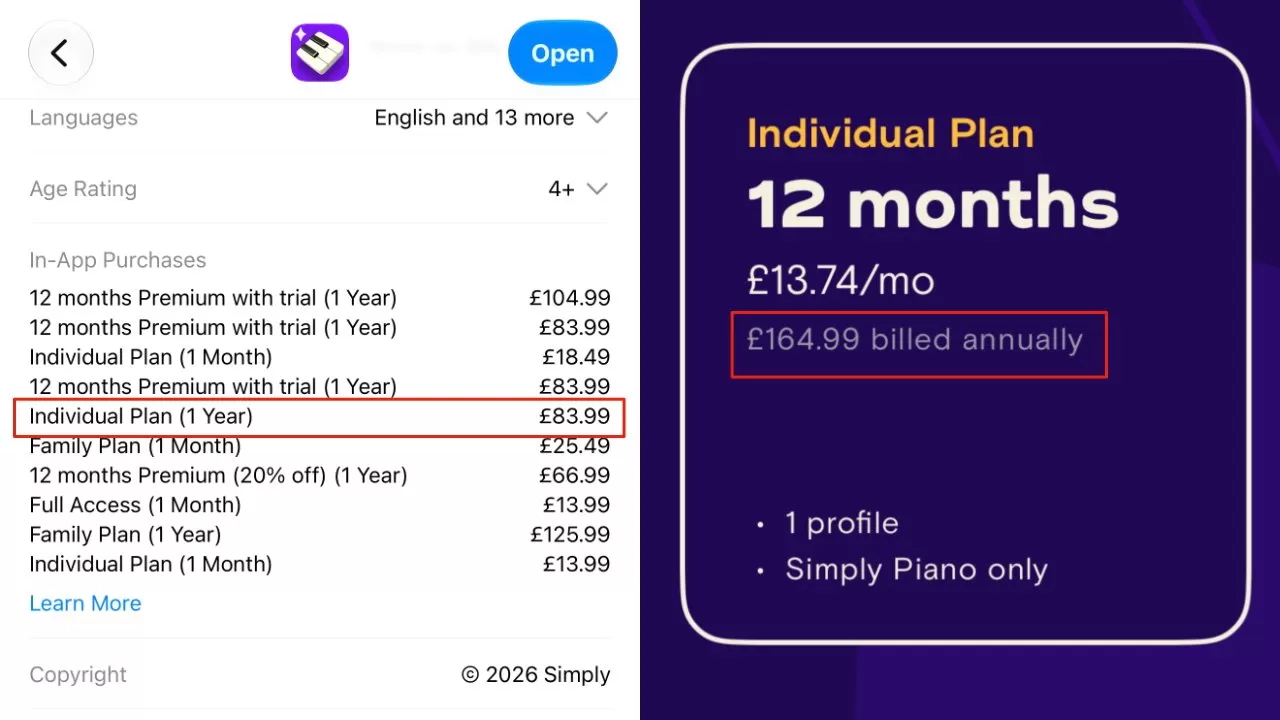
Left: Simply Piano's listing for a one year individual plan in the UK App Store. Right: the same plan as charged inside the app downloaded from the App Store. Note the difference, it equates to $109. Screenshots taken 13 August 2026.
We reported this to Apple in June 2026, but the issue has not been addressed. Right now on the UK version of the App Store, Simply Piano's listed price for an individual annual subscription is about $109 less than the app then charges.
It can't go on
Apple is actually right about third-party App Stores, it is a dangerous and even frightening prospect that apps will not be tested and reviewed. It is true that we can't automatically trust an app and just download it to see if we like it.
We're already there in the official App Store. Trust in the App Store is already eroded, and it's entirely Apple's own fault.
The positive side is that for now it is under Apple's control and so Apple can do something about all of this. There was the recent moment, for instance, when it pulled Telegram practically the moment that a user posted porn on it.
Apple also quickly restored it after the issue was resolved, so that's another positive thing. But the Telegram issue was one user reportedly doing this deliberately to take down the app.
Grok flooded X with AI-generated porn in January 2026, some of it featuring minors. Reportedly Apple did threaten to remove Grok, and it did reject an update.
But the app remained on the App Store throughout. Apple rattled the sabers, and threatened removal. It didn't actually do anything to prevent a horrific situation.
Maybe you can make a case that the App Store Review team gets tricked by developers replacing their listings or assets. And Apple surely isn't lying when it proclaims that its App Review process prevented more than $2.2 billion in potentially fraudulent transactions in 2025.
What we cannot know, though, is how much fraud actually got through. We cannot know how much of that $2.2 billion was only prevented because of users like Johnson.
The Grok incidents were in your face headline news that caused global outrage, and the world's richest man was publicly laughing about it. If that isn't enough to get an app blocked, it's no longer that the review process is about safety, it's apparently about which developers have the most clout.
You shouldn't have to be the one to investigate apps you want to try. That is the future of third-party App Stores, and that is a future to be fought.
But that future is here with the first-party App Store we already have. And this inability to trust an App Store is here, right now, because Apple will not do what it keeps saying it is doing and what it is charging developers to do.