Search ads in Apple Maps will provide a great incentive system for local businesses to care about the platform, but it appears to be a bridge too far for users. It's a problem of Apple's own creation.
Advertising isn't inherently evil, but Apple's work to make users wary of surveillance capitalism has become a double-edged sword.
We're all more aware of the dangers of data collection and its misuse. That also means we've been programmed to reject all forms of advertising.
So, even when Apple attempts to better its services revenue and make its apps more appealing for business use, the users are pushing back. They hear "Apple Maps is getting ads" and think "Apple is making my premium iPhone experience into junk."
It's a fair response after years of Apple telling everyone that companies like Google, Amazon, and Meta collect and abuse user data for their advertising platforms. However, the systems that the trio use, and the lack of curation by the same three remains the issue.
That lack of distinction has created a hatred for all kinds of ads. To make matters worse, YouTube, Netflix, and others have further demonized ads by making them so prolific and intolerable that users have to pay money for a sane experience on their platforms.
I don't blame people for their negative reaction to any news about ads. Go back a decade to my mid-twenties and I'd tell you no amount of money was too small to ensure I never saw an ad again.
I've learned better since then. I want to share a few simple reasons why some ads might actually be good.
Paid search ads incentivize businesses to care
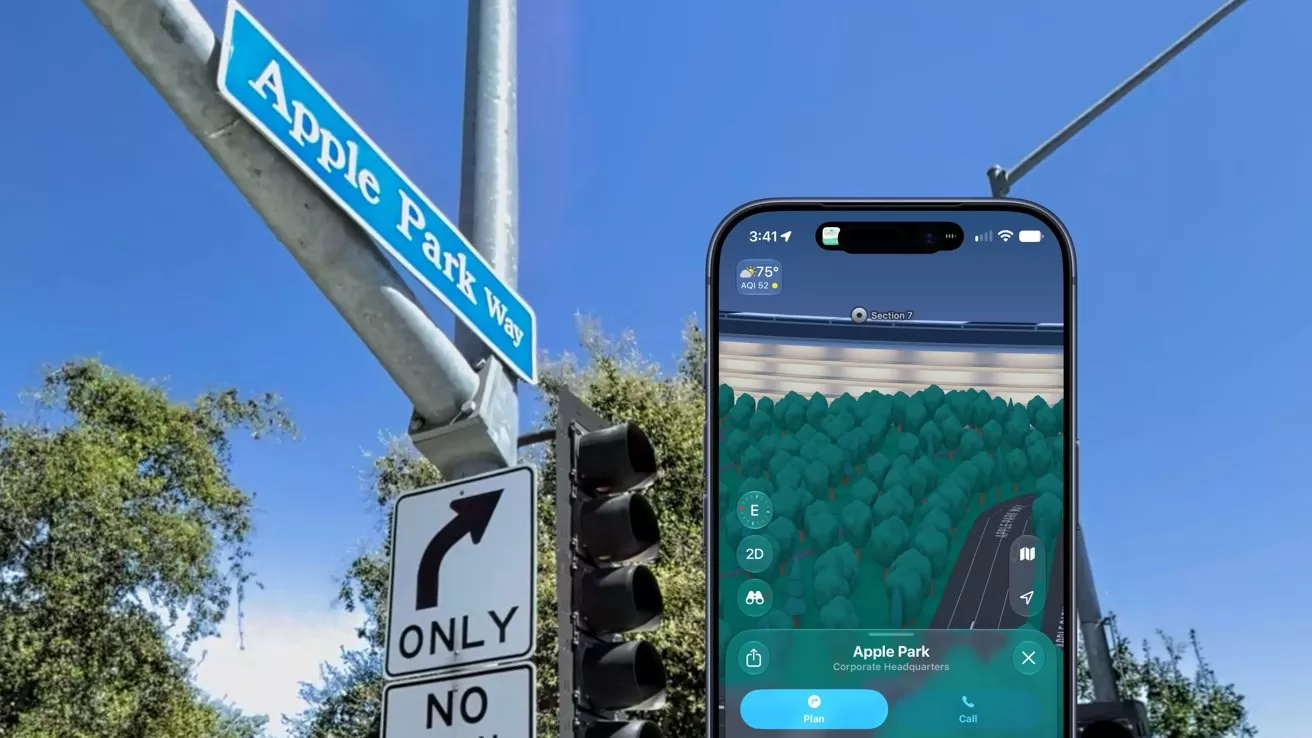
I choose Apple Maps over Google Maps even though I live in a relatively small town in northeast Tennessee. It doesn't have the Pixar-level graphics for buildings and trees, beautifully rendered turn-by-turn directions, or detailed business data that might be found in Cupertino, but that's okay.
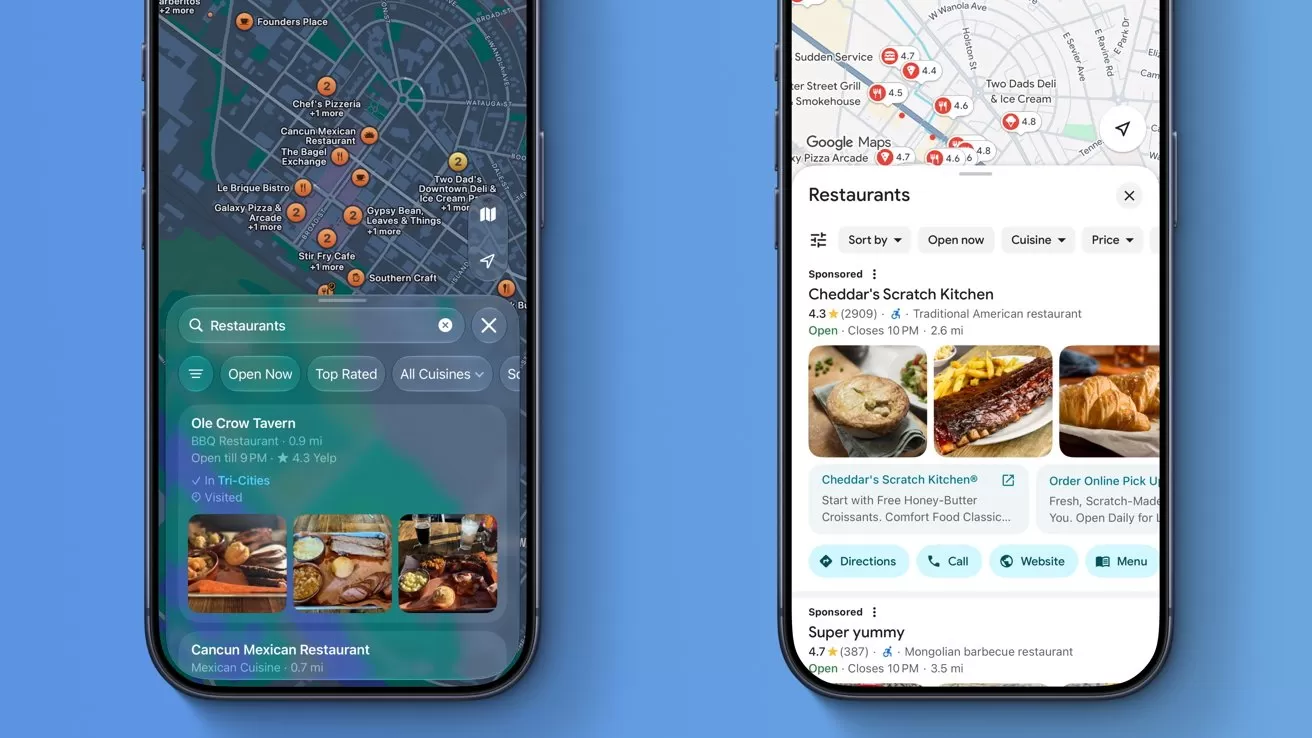
Apple Maps results (left) will have an ad in that first slot, while Google showed two large ad spots above results (right)
When I open Google Maps, I see a dense interface that works against my every instinct. Icons flood the screen buttons are everywhere, and the UI itself feels antiquated and ugly.
Google Maps is built for utilitarian search and direction needs, while Apple Maps prioritizes user experience. However, Apple's priorities don't do much for the businesses found on the platform.
There are many reasons businesses prioritize Google Maps with up-to-date data, but it is primarily tied to financial incentive and search results. I have zero doubt that everyone reading this has been pestered by a business to leave a review on Google Maps.
Google provides an incentive structure for its map platform, and businesses react to that. If businesses want to show up in search, they need a good review score, complete and up-to-date data, and when that fails, they can pay for an ad slot.
Apple Maps seemingly has zero incentive systems for businesses. I highly doubt that my local businesses are even aware that they can claim their page in Apple Maps.
They'd all say the same thing: why bother when everyone uses Google?
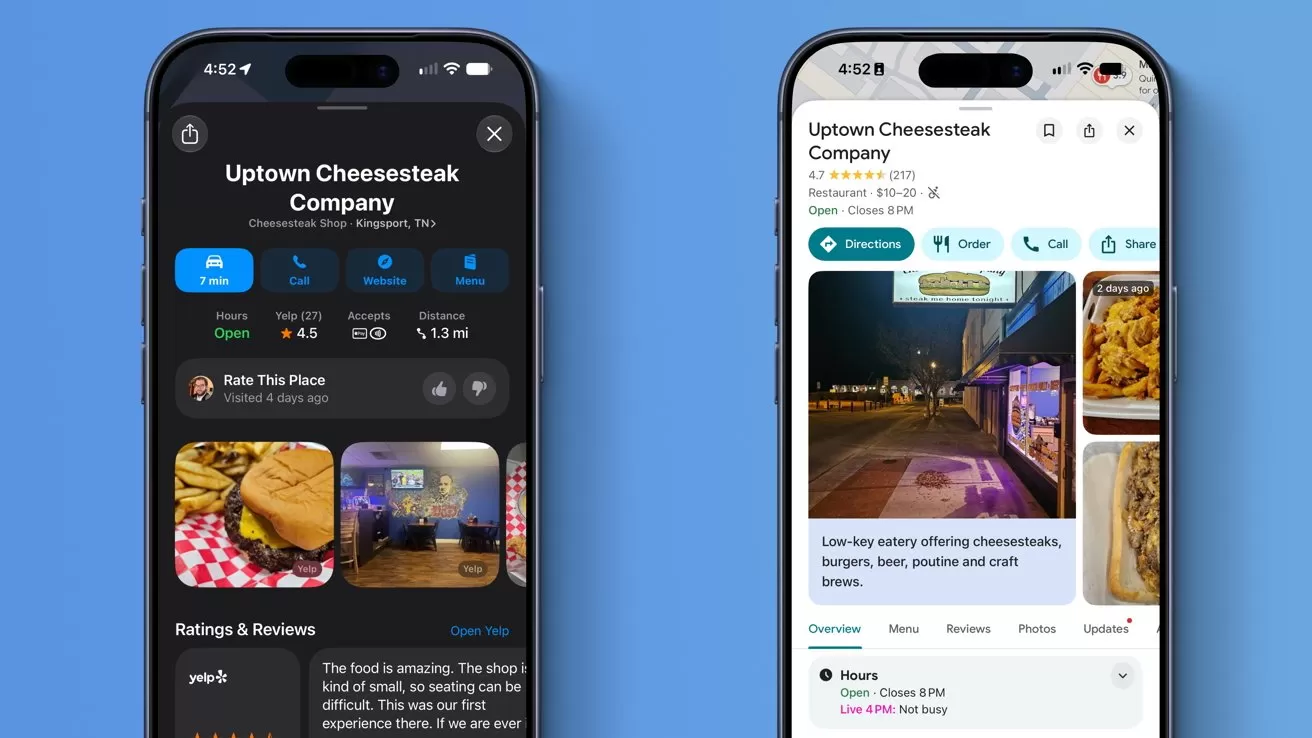
Apple Maps benefits when a business cares enough to claim its location in the app
Apple Maps is arguably too small to benefit from incentives through search results and review scores. So, it has one big lever it can pull: advertising.
It will take time and effort, but Apple could easily build incentive structures starting with paid search ads at the base. If even one business bothers to advertise in a region, it'll become a competitive way to get eyeballs.
What's more, the Apple effect will hold strong here and create a snowball. Apple's iPhone users tend to have more expendable income, thus they become more lucrative targets.
Google Maps is general advertising, whereas Apple Maps will specifically unlock a demographic statistically proven to spend more. When businesses advertise via Apple Maps, they'll also want to ensure their business data is up to date.
It's a win for the business, Apple, and the consumer. Apple Maps suddenly gets more robust business data, the business gets an easy way to advertise to lucrative customers, and users get to benefit from a strengthened map platform.
Tasteful ads educate consumers
There is a reason why advertising has existed since humanity invented basic commerce. If you have a product or business, it may as well not exist if people don't know about it.
The most pure form of advertising is a billboard. You can see it on the highway as you drive by, but you can easily ignore it too. If you've ever driven down I-95 south of DC, some of them are even entertaining in how stupid they are.
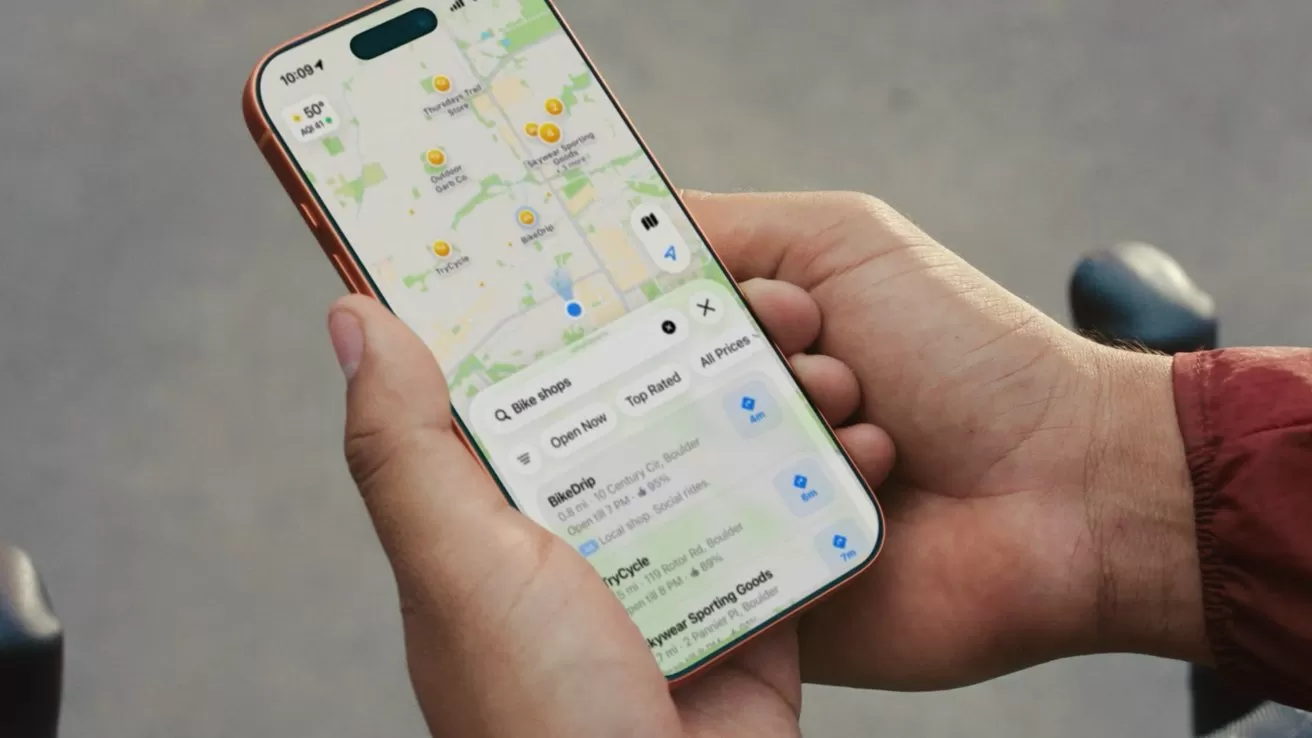
Apple's example ad shows a bike shop in a result
So far, all of Apple's advertising efforts have been billboards driven by minimal aggregated user data. It isn't privacy-invasive, persistent, or a nuisance.
I'm not talking about Apple News ads, which still somehow persist in their current form. Those are gross on every level and need to be scrapped and rethought.
Buying a search ad in the App Store is like paying to be displayed on an end cap in a big retail outlet. You've already got shelf space in the store, but pay a bit more and you'll be the first thing a person sees in that aisle.
Apple Maps search ads serve a similar function. Users can find you through regular search, but by paying for an ad slot, you'll be seen first.
Maybe you're a new business in town and want to compete with the local steakhouse. You take out an ad against keywords like steak, dinner, etc., and show up when someone is looking for dinner ideas.
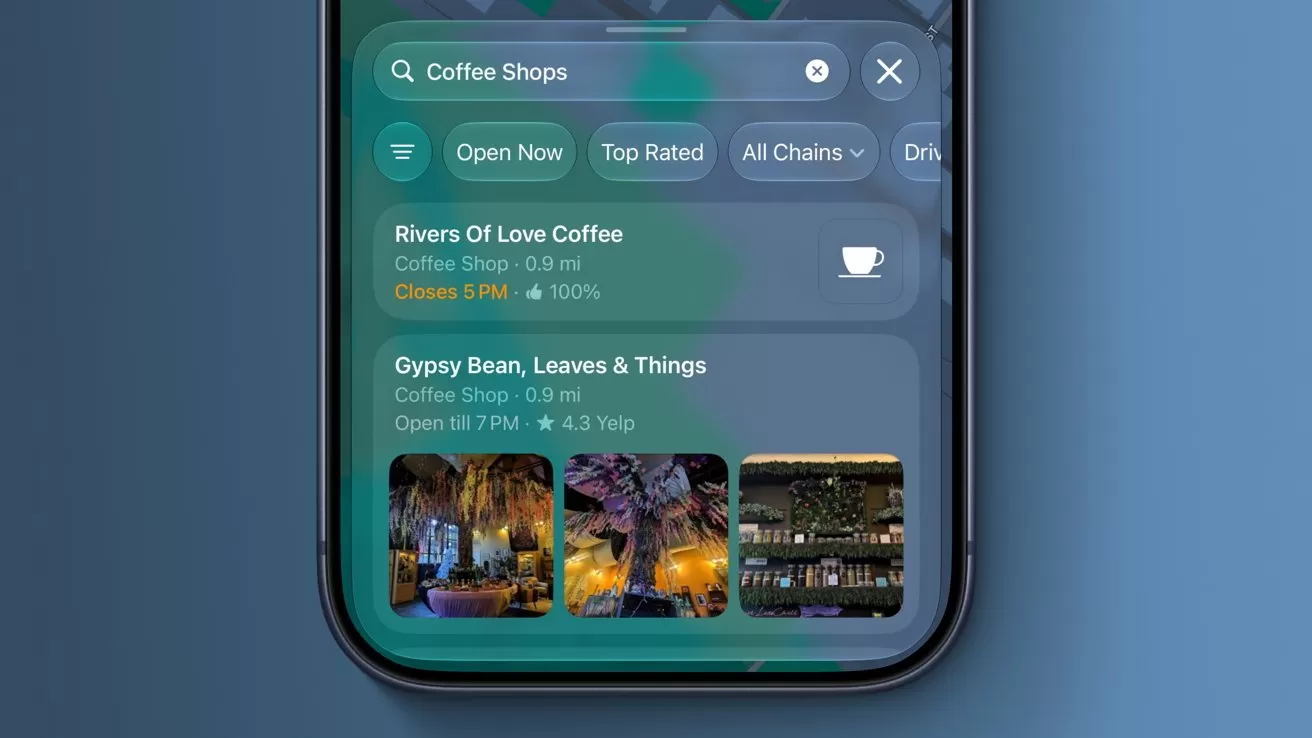
Apple's search could help local brands stand out with ads
The customer gets to see a new business in search results and you get to have some visibility in an otherwise locked-out market. There is nothing wrong with this form of advertising.
Again, it's a billboard. Users can choose to interact with it or scroll past.
Apple Maps ads won't be persistent, display over driving directions, or interrupt the user interface in any way.
It appears that search ads will also be limited in that they'll show the same information as other search results with the word "ad" next to it. Apple doesn't appear to be offering a way to advertise deals or discounts, just the existence of the business.
Also, it seems highly unlikely that Apple will allow advertisers to send push ads through Apple Maps. For now, it seems to be search ads only, and that's beneficial for the reasons I've outlined above.
As long as the ads remain tasteful and simple, they'll benefit users and businesses alike.
Ads monetize an otherwise non-monetizable business
I've saved this argument for the end, as I think it is the most sensitive of the bunch. I do believe most rational people will understand and agree that advertising isn't inherently evil and can have its place.

Apple Maps is working on more detailed cities that could roll out faster with more financial overhead
However, the most persistent and aggressive argument against Apple Maps getting ads has been around the premium nature of iPhones. Apple told us that ad placement was for monetizing platforms or subsidizing purchases while Apple's premium products didn't need such things.
Jump ahead a decade and we're seeing our most expensive iPhones ever get advertising in some places. It is easy to get frustrated and ask "what gives?"
In 2026, you can get a free TV that has a second display that permanently displays ads. Kindles are cheaper because they have ads on the display when put into sleep mode. Some tablets and Android smartphones are inexpensive because of lock screen ads.
These are all signs of subsidizing hardware with persistent and grotesque forms of advertising. There is also no doubt that these platforms are filled with tracking software to invade the user's privacy.
I'm here to tell you that Apple's advertising ventures don't come close to resembling these gross technologies.
When you buy an iPhone, you are paying for the hardware and the operating system. Everything else, including Apple's first-party apps, is more or less subsidized by this purchase.
Now, I get it. Apple has all of the money in the world and continues to break revenue records each quarter. It is easy to look at this business and say, "When will enough be enough?"
Apple isn't your friend, it isn't a charity, and it is only so big as it is because of departing Apple CEO Tim Cook being relatively tight with the coin purse.
Everything costs money, and that money has to come from somewhere. Apple enjoys industry-leading margins, and shareholders would revolt if that changed.
Apple's profits from iPhone sales subsidize a lot of services development
So, we're stuck between a rock and a hard place. Better services cost more money, but there are limited ways to actually get that money without charging customers directly.
Imagine if, instead of search ads, Apple asked for a monthly fee for Apple Maps. It would kill the platform, period.
Let's look at Apple News ads for a moment. They exist as a way for Apple to separately build a cash pile to pull from to pay publishers.
Apple News+ is what provides you access to some publications, like WSJ or various magazines. That premium service has nothing to do with the free side of Apple News, which is monetized through poorly sourced web ads.
If you had to pay for the basic Apple News, you wouldn't use it. However, that doesn't mean Apple shouldn't find ways to monetize the platform on its own.
Enter Apple Maps ads. Sure, what Apple earns selling those ads will be a paltry sum compared to literally any other part of its business.
However, that money can be tied directly back into the development of Apple Maps.
If this is the Apple Maps experience we have got so far through pure subsidy via hardware sales, imagine how it might grow when it has its own revenue pool. Apple Maps is already competitive with Google Maps, but advertising could let it pull ahead in some ways.
Apple Maps ads won't hurt you
Let's put this all together:
Search ads on Apple Maps will serve as basic billboards that incentivize businesses to compete on the platform. Apple will gain a new revenue pool to pay for Apple Maps advancements, and consumers get a more robust and up-to-date data set provided by businesses seeking to compete.
The only thing we have to do to enable all of these benefits is seeing a tiny blue rectangle that says "AD" at the top of search results.
Ads can actually help improve some Apple services when used strategically
What's more, Apple is actively trying to ensure the advertising sticks to relatively straightforward consumer-focused entities. Apple won't allow ads from bail bonds, home services vendors, or cryptocurrency ATMs, for example. Google does.
Apple's billboard approach to advertising is a breath of fresh air when surrounded by the awful nature of the rest of the advertising industry. That said, not all billboards work, and some ruin otherwise beautiful scenery.
A good billboard is just as dependent on the content as the location. So far, Apple hasn't placed any anywhere that could be seen as particularly gross or out of place. And, it won't interfere with your driving directions.
Apple Maps is literally an app where users go to search for businesses. Being mad at Apple Maps search ads would be like being angry at advertising in the Yellow Pages.
We will reexamine this conversation if Apple lets advertising go off the rails. The second we start getting push ads for Wendy's coupons or banner ads, or an ad that takes over your navigation screen while you're screaming down the interstate of your choice, let us know.
Until then, I think Apple's push into advertising in Apple Maps is tasteful and useful. I wish I could say the same about Apple News, though.