The original Mac Pro is 20 years old today and even though the whole range is now gone, people are still celebrating this old, favorite workhorse from a time when it was the clear top of Apple's lineup.
Apple finally killed off the Mac Pro in March 2026, just shy of its 20th anniversary, but its death throes really began six years earlier as Macs transitioned to Apple Silicon. The Mac Pro was the last to make the leap away from Intel, and by then it didn't matter.
The Mac Pro had been in doubt many times in its history, but Apple Silicon robbed it of its place as the Mac for every user who needed the greatest performance possible.
Mac Pro has always been a niche machine because of it's extremely high specifications, for the time, and its correspondingly even more extremely high price. But it was a niche market that needed this power and was willing to pay for it, so the Mac Pro sold well. Well, it sold.
After Apple Silicon and especially how the newer and lower-cost Mac Studio became the better buy, Mac Pro's niche got even smaller.
Then for people whose work meant paying Mac Pro prices was still a bargain, the Apple Silicon Mac Pro was sufficiently lacking that it badly misses the mark.
To appreciate how important the original Mac Pro was, however, take a step back to the 2019 model, which was so desired and so anticipated that Apple began teasing it — in 2017 and again in 2018.
The last Intel Mac Pro
The first time they talked about it, Apple was careful to not give any details. Phil Schiller just said that Apple is "completely rethinking the Mac Pro".
"We're committed to making it our highest-end, high-throughput desktop system, designed for our demanding pro customers," said Schiller.
The second time they discussed anything about it was last April when they specified that it would be out in 2019.
"There's many different types of pros and obviously they go really deep into the hardware and software and are pushing everything to its limit." said the head of the Pro Workflow Team, John Ternus, who's since done quite well at Apple. "We want to provide complete pro solutions."
Demand for a top range Mac Pro
Professional or power users have demanding needs and those needs only get more demanding. But the requirement for the best that Apple could make is the same now as it was when the original Mac Pro came out in 2006.
Before it was released, Mac faithful could smell something on the wind, but didn't quite know whether to believe that the old PowerPC processor would be replaced by Intel. They also didn't know whether to believe the idea that this would make a huge difference for the Mac.
Then On June 6, 2005, Steve Jobs formally revealed that it was true, Apple was switching to Intel processors for the Mac. That year he detailed the company's roadmap.
"Starting next year, we will begin introducing Macs with Intel processors in them," he said at WWDC 2005. "So when we meet again this time next year, our plan is to be shipping Macs with Intel processors by then. And when we meet here again two years from now, our plan is that the transition will be mostly complete. And we think it will be complete by the end of 2007. So this is a two-year transition."
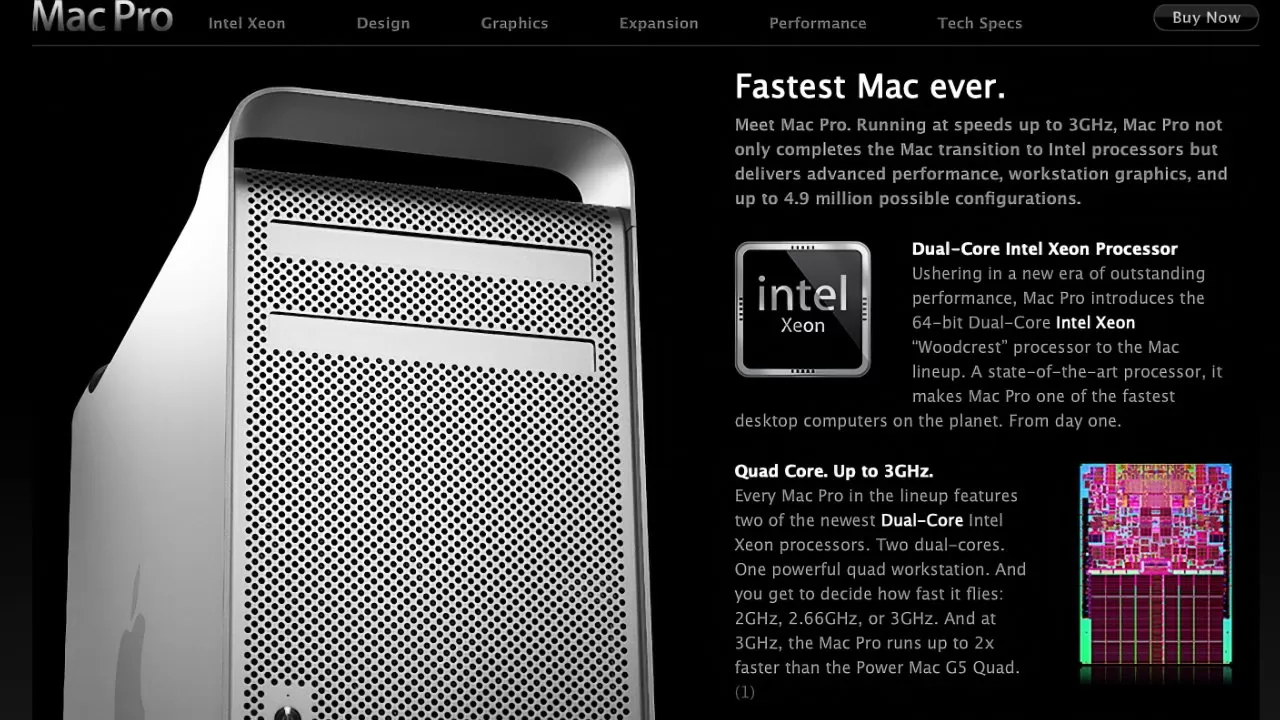
How Apple promoted the first-ever Mac Pro back in 2006 - image credit: Apple
That's as clear as Apple ever gets. Every Mac in the range was to have an Intel processor. It didn't guarantee that there would be what came to be called the Mac Pro, but people had hopes for a high-end model because there was already a top of the line PowerPC computer called the Power Mac G5.
An important move for Apple
One of the reasons Jobs gave for moving from PowerPC to Intel was specifically to do with that machine and its development. Standing in front of a slide showing a PowerMac G5 with the words "3.0GHz?" Jobs had a lot to say.
"I stood up here two years ago and I promised you this," said Jobs, pointing at the screen. "And we haven't been able to deliver that to you yet. As we look ahead, we can envision some amazing products we want to build for you and we don't know how to build them with the future PowerPC roadmap."
Over that next year up to June 2006, Apple steadily introduced Macs with Intel processors but not the replacement for the PowerMac G5. Until 1:08 PM eastern time on Monday August 7, 2006.
The cheesegrater is born
"In the first two quarters, we transitioned almost all of our product over to Intel. Except for one, and that is the Power Mac," Jobs declared. "Well, today the Power Mac is going to fade into history."
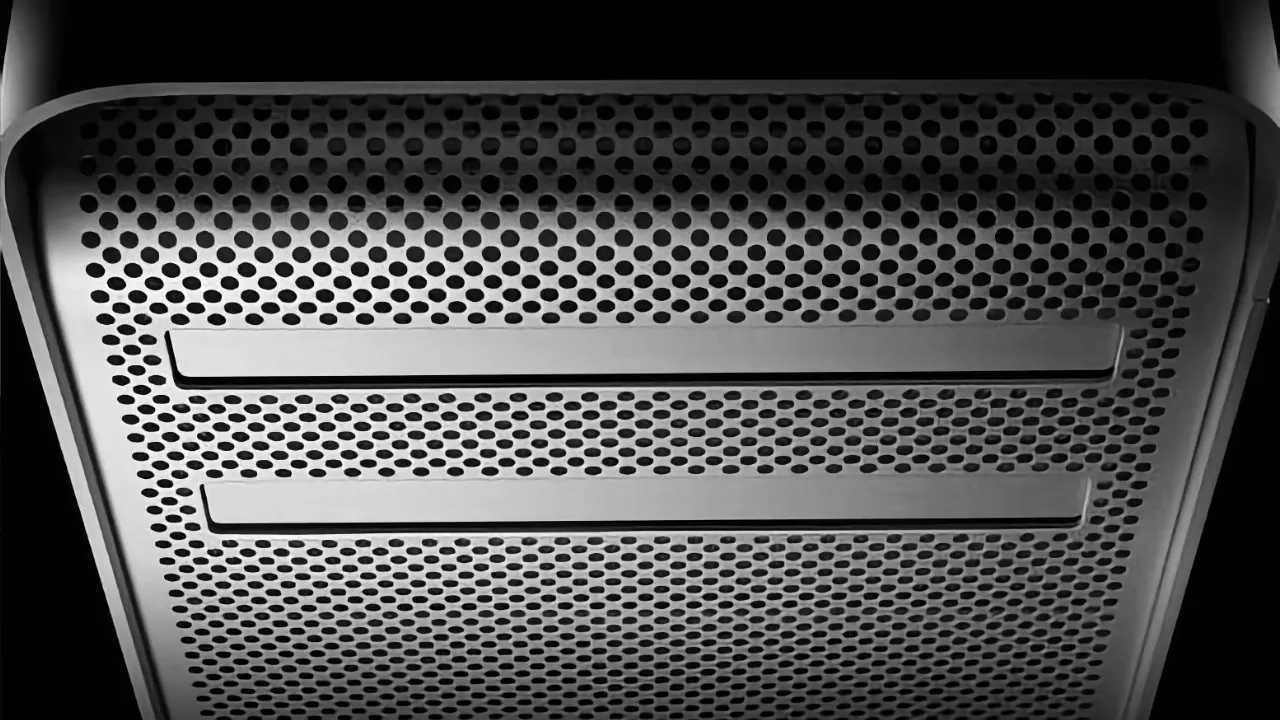
Phil Schiller then came on stage to reveal what looked like exactly the same machine as before. The same large aluminum casing, the same handles for carrying it and the same ease of access to the insides.
"We have the best enclosure in the business, this is a beautiful enclosure design," Schiller said. "On the outside it has all the benefits as before. Inside, it's entirely new."
Performance promise
This Mac Pro did reach Jobs's promised 3.0GHz and did so with Intel's Xeon processor.
"This is the Mac that so many of our highest-end customers have dreamed of," said Schiller. "For our highest-end customers a feature they've really wanted: they're 64-bit. So this new Intel Xeon chip is an amazing processor to put into our products but in every Mac Pro we're going to put two of them. All Mac Pros, quad Xeon performance. These are screaming-fast machines."
Every new Mac is seemingly the fastest Mac Apple has ever made, except perhaps the MacBook Neo. But this one truly gave a huge leap with a claimed doubling of performance over the Power Mac G5.
It also gave a boost in what that performance was per watt of power. Typically that's a concern when you're building notebooks, since you're balancing the needs of work and battery life, but Schiller pointed out that it also had great benefits with this desktop.
"Performance per watt means we need less cooling systems inside the box too. Which means we can do more with the space we have," said Schiller. "So we've doubled the number of drives inside the Mac Pro to now four hard drives of up to 2TB of internal storage."
"And our most requested feature," he continued, "we've added a second optical drive for our pro customers as well."
There was also space to connect more external devices both at the back of the machine and now the front. The front added a second USB 2.0 port and Firewire 800, while the back's most significant change was a double-wide graphics slot allowing for the biggest and most powerful GPUs to be installed without sacrificing an adjacent slot.
So the New Mac Pro was "screaming fast" and it came with greater expansion but still the same enviably easy way of doing that expansion. The enclosure let you open the whole side and then just snap in new hard drives without any cabling or any fiddling.
It was deeply customizable, it was wicked fast, it came with 1GB of RAM, but could address 32GB of RAM, and Schiller announced that it was shipping that day. On August 7, 2006, you could buy one for $2,499 — $4,140 in today's money.
The last-ever Mac Pro sold from $6,999 in 2026.
Not standing still
The original Mac Pro — version 1,1 — stayed on sale until a speed bump in April 2007. Then that version 2,1 lasted until the following January when the 3,1 upped the performance with a faster quad-core Intel Xeon 5400 processor. You could upgrade it to have two such processors plus up to 32GB RAM.
It would be another 15 months before 3,1 was released. The Mac Pro (Early 2009) was particularly suited for multi-threaded operations where software was able to split its load between several processors. Strictly speaking, the Intel Xeon 5500 processors were slower than the previous 5400 ones but with better caching and communications between components, the result was a faster machine.
Another significant update was in July 2010 when as well as moving to Intel's Xeon 5600-series processors, you could now have up to 64GB RAM and 8TB storage.
This lasted as Apple's flagship model until arguably that flag was faltering. It was two years before the Mac Pro saw another update. The July 2012 release now came with two 6-core 2.4 GHz Intel Xeon Westmere-EP processors.
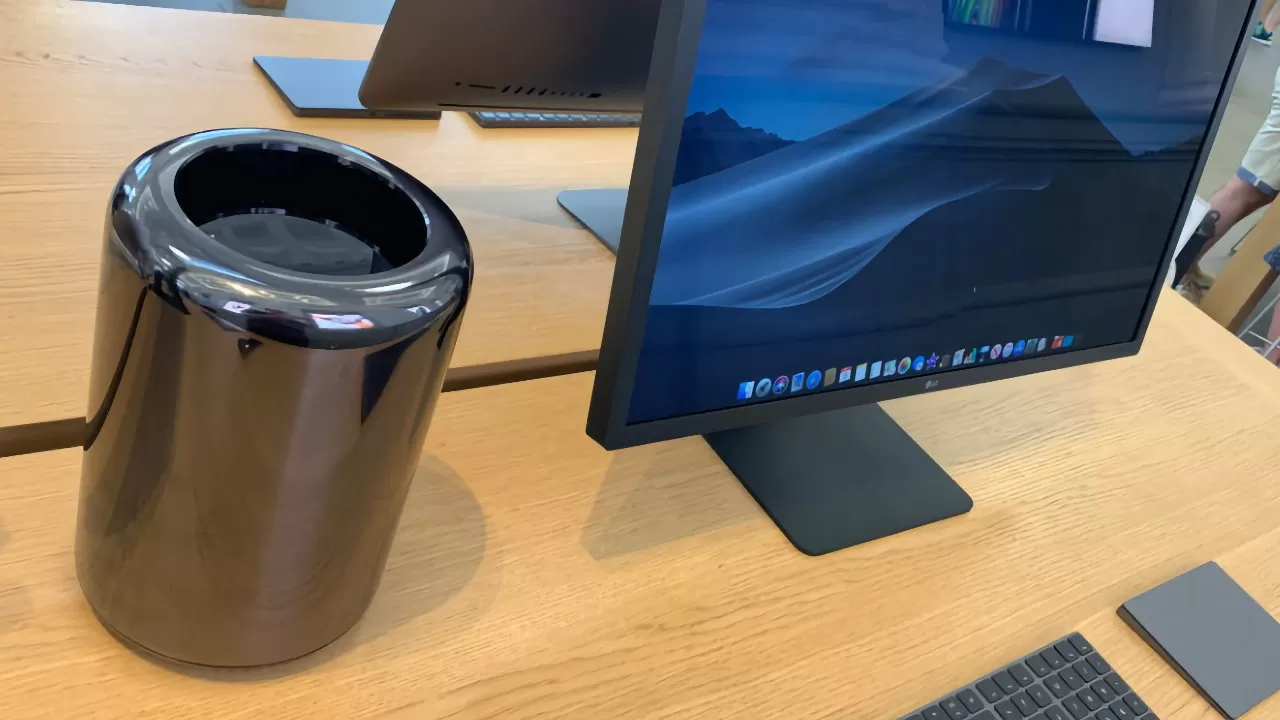
The trashcan Mac Pro was a great-looking design but didn't live up to expectations.
On the outside, it still looked exactly the same and with the interior no longer improving radically, Apple's professional users began clamoring. This time Apple responded by previewing a brand-new design for the Mac Pro at WWDC in 2013.
Again Apple was telling professional users to hold on, something big was coming. The difference is that unlike with the next 2019 Mac Pro, back in 2013 Phil Schiller was able to show off the machine. He was able to announce that it would be shipping later that year and it did, if just barely, on December 19, 2013.
He was even able to comment on criticism that Apple hadn't been able to improve the Mac Pro: "Can't innovate, my ass," he said. Accurate at the time, Schiller has seen the remark re-used in less than complimentary exchanges since, and chiefly because of what happened to that 2013 Mac Pro.
This is the version that Apple replaced in 2019, but had basically told everyone to stop buying it in 2017. It looked great, this was the trashcan Mac, but it had no internal expansion and it overheated under pressure.
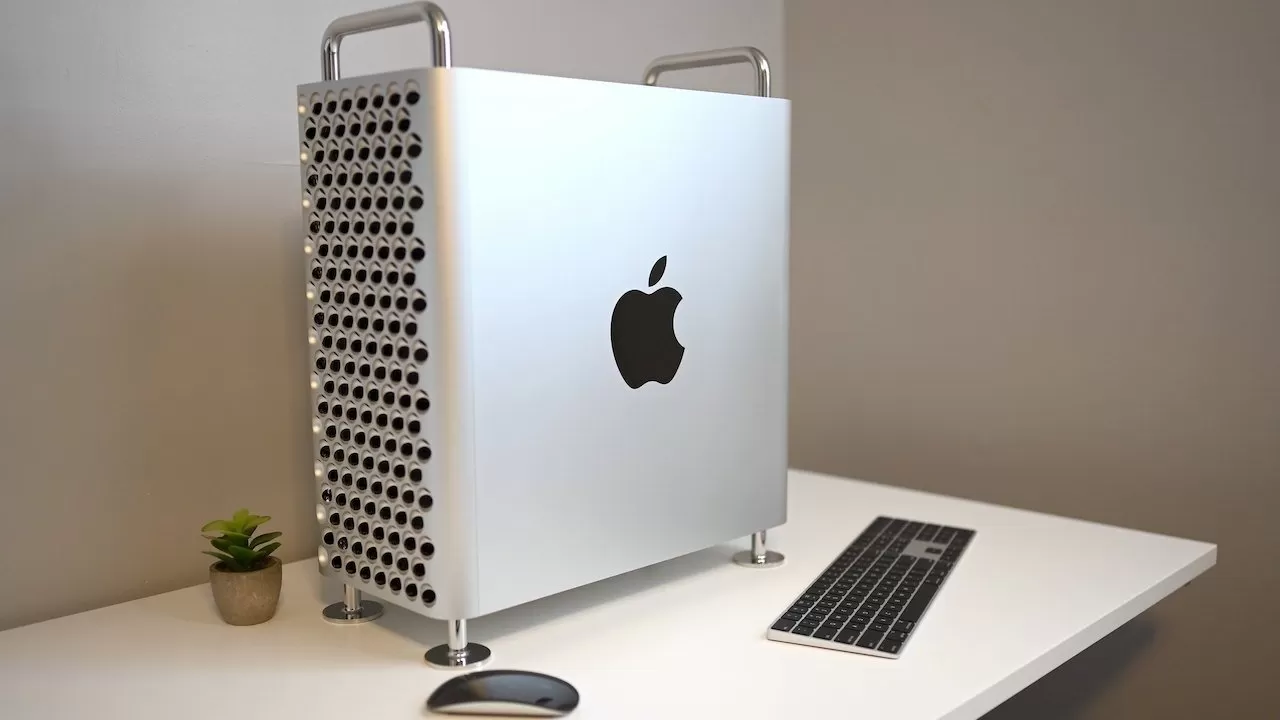
It regains the vaguely cheesegrater-like appearance, but the current Mac Pro is not what it once was.
Consequently, as smart as the design was and as true as it was that the 2013 Mac Pro was the most powerful at the time, nobody misses it.
Whereas exactly two decades on since we first met the Mac Pro in that "cheese grater" casing, it is still remembered. Three years since its Apple Silicon replacement came out, it's remembered.
And when Apple discontinued it, despite initial plans to release an even more powerful model, the Mac Pro is lamented because of that original 2006 version.
What the Pro wants
There's no real definition of a pro user, it's just a term that Apple uses when it wants to charge more for something. Nonetheless, there will always be someone claiming that a machine isn't "Pro" because it has or doesn't have any given feature — and it will be someone selling you self-interested snake oil.
The Mac Pro officially stayed at the top of the range until its demise, but for so long it was just the titular head. It stopped being the Mac to lust after, replaced in people's affections and budgets by the Mac Studio.
And as much as some of us might like, the cheese grater's glory isn't coming back soon.