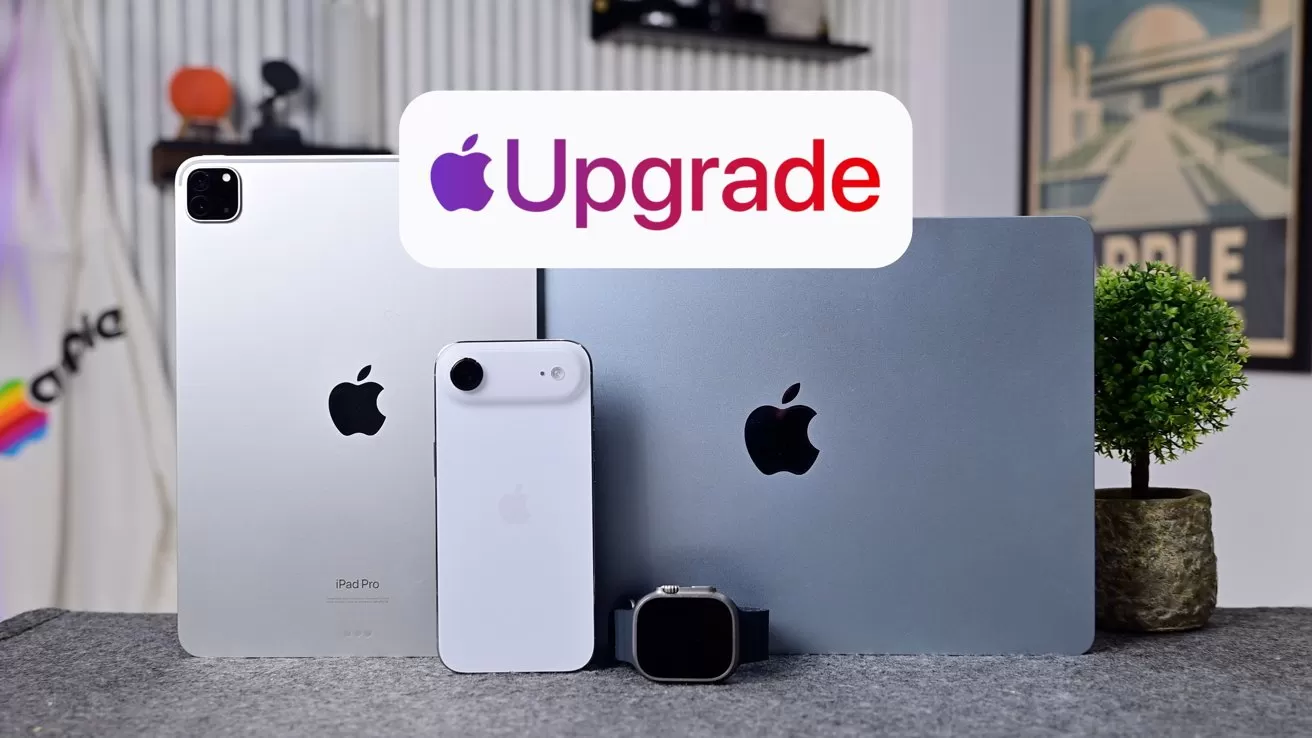
Apple reportedly evaluated giving Apple Upgrade buyers with iPhones that came with all their previous iPhone's data preloaded, but that didn't make the final cut.
Apple Upgrade is a lease in the US rather than a loan and so it's different to the iPhone Upgrade Program it replaces, but it could have been more different still. According to Bloomberg, Apple at least considered preloading a user's data.
It's been described as a "white-glove component" of the program. That means it was to mark out Apple Upgrade as a premier service, just as you could once have had the 20th Anniversary Mac delivered and set up for you.
In this case, it reportedly applied to users as they reached their second and subsequent years of Apple Upgrade. If they upgraded their iPhone, it would have come completely set up and ready to use.
That means no setting up for the user and no transferring of data, because it was all already done by Apple. It's simpler to move between Apple devices than it is, say, Windows ones, but it's still a chore and sometimes a pain.
So this would have eliminated the entire thing and genuinely made getting a new iPhone simple. But it would also have meant Apple shipping you an iPhone that had all of your data on it, despite the company hammering on the point that your data is yours and yours alone.
From a privacy perspective, the program would be advertising that Apple has all of your data. The optics on it aren't great. Maybe it only uses it to set up your iPhone, or maybe it doesn't.
The report suggests that turning on Advanced Data Protection would prevent Apple being able to do this. Advanced Data Protection is an option for iPhone users, except in the UK.
So while the report specifies that it was solely how this process could be seen as a breach of privacy, there is more. Since some users will have switched on Advanced Data Protection and others wouldn't, Apple Upgrade would have to offer different levels of service to each of them.
Consequently this does appear to be a feature that would not have any technical reason to stop it happening. But it would have sufficient technical reasons to make it a more complex feature to implement and describe.