
Lacking sane leadership, generative AI companies have proven to be irresponsible, all in service of the almighty dollar. The nuclear power industry is the best example of a model to follow.
Generative AI is the largest automated plagiarism engine that ever existed. That's on top of AI consuming resources and driving up electric costs for neighborhoods that didn't ask for these data centers. Still, there are larger problems.
Generative AI companies suffer from leadership failures and decisions being made for the wrong reasons.
All of these companies need sane, moral leadership. Decisions need to be made by the leaders that will safeguard the development of generative AI, but also be protective of the future, and the resources that are being consumed along the way, human and otherwise.
Making it worse, these AI companies are not learning from experience the way that they should be right now, because that costs money. They are not instituting safeguards the way that they have to, because that costs money.
They do not care about who they've stolen from, and are happy charging users to use those thefts. Yes, because that costs money.
And at the same time, they're all talking a big game. They talk about modernizing business, saving companies money and time, and so forth.
All they're effectively doing right now is moving money around from one billionaire or another, consuming resources, and committing or aiding and abetting felonies.
Hacking into other companies is a felony that the AI is perpetrating itself. Generating nudes without the consent of other people is a felony in most US states, and some international laws are far harsher than that.
We've got a long way to go to get to ethical and sane advancement of the technology. Generative AI needs to be treated like nuclear power's inception, with regulation and control.
Why nuclear power?
Nuclear power is an immense force. Splitting the atom should be regarded as a wonder of the world, where it is mostly a victim of bad press and poor education.
And it can be used for good or evil. There's more of the latter these days, with generative AI committing those felonies that I mentioned earlier than the good parts.
Nuclear power had that early Manhattan Project effort, then it was more fully regulated just a few years later. And a sane leader stepped in to govern how things should be done.
Early fission research was the Wild West
In 1934, Enrico Fermi irradiated uranium with neutrons. At first, he thought he just made transuranic elements. He didn't initially measure the radiation thrown off from the reaction from fission.
Otto Hahn and Fritz Strassman found fission products in 1938. A year later, Lise Meitner and Otto Frisch detailed the process and explained what was happening.
It didn't take long for the governments of the world to figure out that this could be used for power, or weaponry. Regulation, and sane management are crucial to any world-altering invention, but that can take some time to roll out.
The US started the Manhattan Project, whose main goal, first and foremost, was the creation of an atomic bomb. What they learned sparked the idea that a power-generating nuclear reactor could be made.
Here comes more "learning from experience" and "institute safeguards" part that comes from sane, rational management.

The Demon Core has a death tolll
There was a "demon core" that was intended for the third atomic bomb. In the course of early lack of supervision, and insufficient regulation, in two incidents, it went supercritical, killing two scientists and sickening more.
It shouldn't take deaths to change procedures
Sane leadership finally stepped in at Los Alamos. They stepped in late, but they stepped in.
After the second death, Los Alamos changed the rules. They mandated that remote-controlled equipment be used for experiments, which would have prevented the deaths of the two scientists.
In 1946, they melted down the infamous demon core, reusing its fissionable material in other cores.
These were the early days. This is when the US government figured out that there had to be safeguards, or there would be more deaths and more problems.
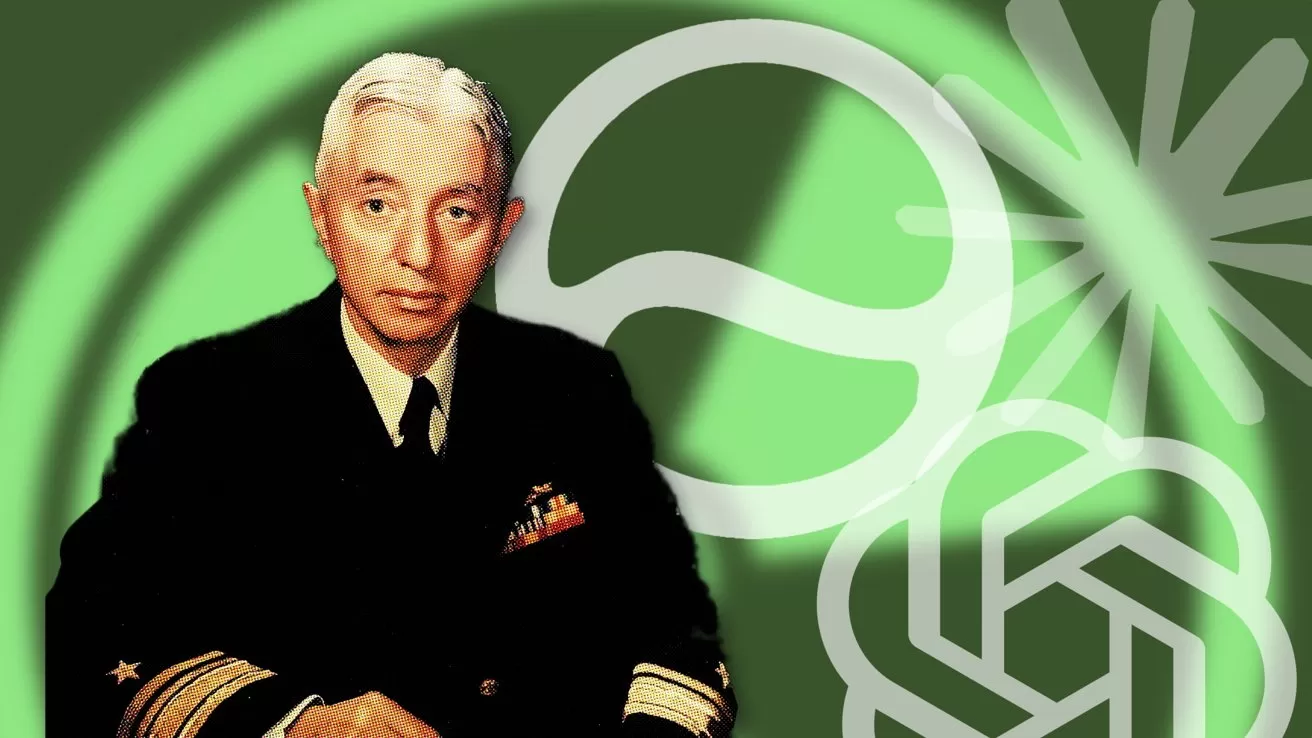
The US Navy had one of these sane leaders too. Hyman G. Rickover is known as the "Father of the Nuclear Navy" for a reason.
Under his leadership and strong hand, he drove the US Navy into the nuclear age, with a project that started in 1946. The US Navy has yet to experience a reactor accident well past his death, and his safety policies kept two AppleInsider staffers alive many years later.
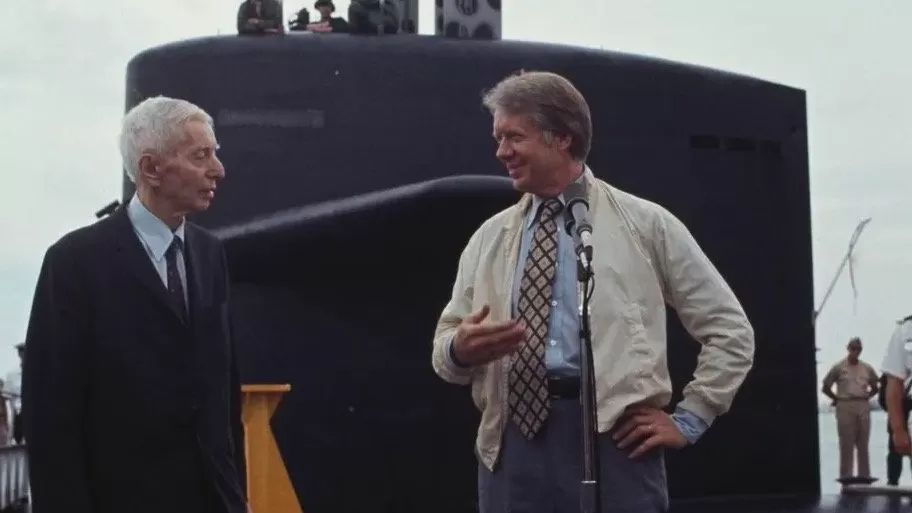
Admiral Rickover with Jimmy Carter, at commissioning of USS Los Angeles (SSN-688)
On the other hand, the Russians have had at least 11 Naval reactor accidents in the same time period. Beyond seagoing reactors, one incident in 1957 associated with military radioactive waste contaminated 23,000 square kilometers.
And then there's Chernobyl, which by far is the worst reactor accident that has ever happened.
Most of the US nuclear power industry's hires are from the US Navy, as you'd expect. The US nuclear industry did have Three Mile Island in 1979. There were no deaths from that accident, and a one-day dose of about 1/300 of annual exposure from all sources to the citizenry near the plant.
And, it inspired more changes in training, regulation, engineering, procedures, and in the industries that built reactors in the US at the time.
Rickover retired in 1982, after 63 years of service. He died in 1986, and a few years later, a submarine was named after him. That culture of safety persists in the US Navy to this day.
Nobody is taking Rickover's role in generative AI. Given the pursuit of profitability, that seems unlikely.
It is sorely needed, though.
Obvious failures, insignificant course correction
AI leadership is not sane, nor do they seem to learn from failures. When presented with AI breakouts and the felonies of breaking into other companies, leadership shrugs and promises changes that never seem to materialize.
These things seem to keep happening. These incidents don't seem to be forcing any changes inside all of these generative AI companies.
A Rickoverian culture of safety is hard to implement and is expensive. It's still needed here.
Instead, the same mistakes keep being made. All we're hearing is how much money is being spent, how much RAM is being used, how much utility prices are climbing because of data centers, how much water is being consumed by open-air cooling systems, and more.
I'm not certain we're going to find 10 Rickovers for generative AI. That man was more than a force of will; he was a force of nature and a menace simultaneously, unpolluted by profit margin concerns or the demand for shareholder gains.
So instead, regulation will have to do. There's a meeting on August 11 at the White House with the existing CEOs to present a draft, again, and talk to the President, again, so we'll see what pops out the other side.
I'd like to think that the generative AI industry can self-regulate in the interest of the users. It's clear from behavior that they can't, and public comments strongly hint that they won't accept any real control being ceded to the feds.
The road ahead
Given how generative AI companies plagiarize and don't generally compensate publishers of any size or media as a general rule, the rocky road that we're on should have been apparent from the start.
It's not too late to change. It's not too late for one of these companies to realize that there's a foundational problem or five here that all of them need to be fixed.
The feds have started to figure out that there need to be changes and controls. But when they tell you that it's time to make some changes, the exit you should have taken to make those changes is probably behind you.
Maybe the company CEOs are thinking about a course correction. You can't tell if they are, over the tumult that they're making that it's too hard to identify sources, cite properly, or pay the folks they're stealing from.
As with most things, we'll see where we end up with time. And, we'll see what they actually do, or are forced to do.