
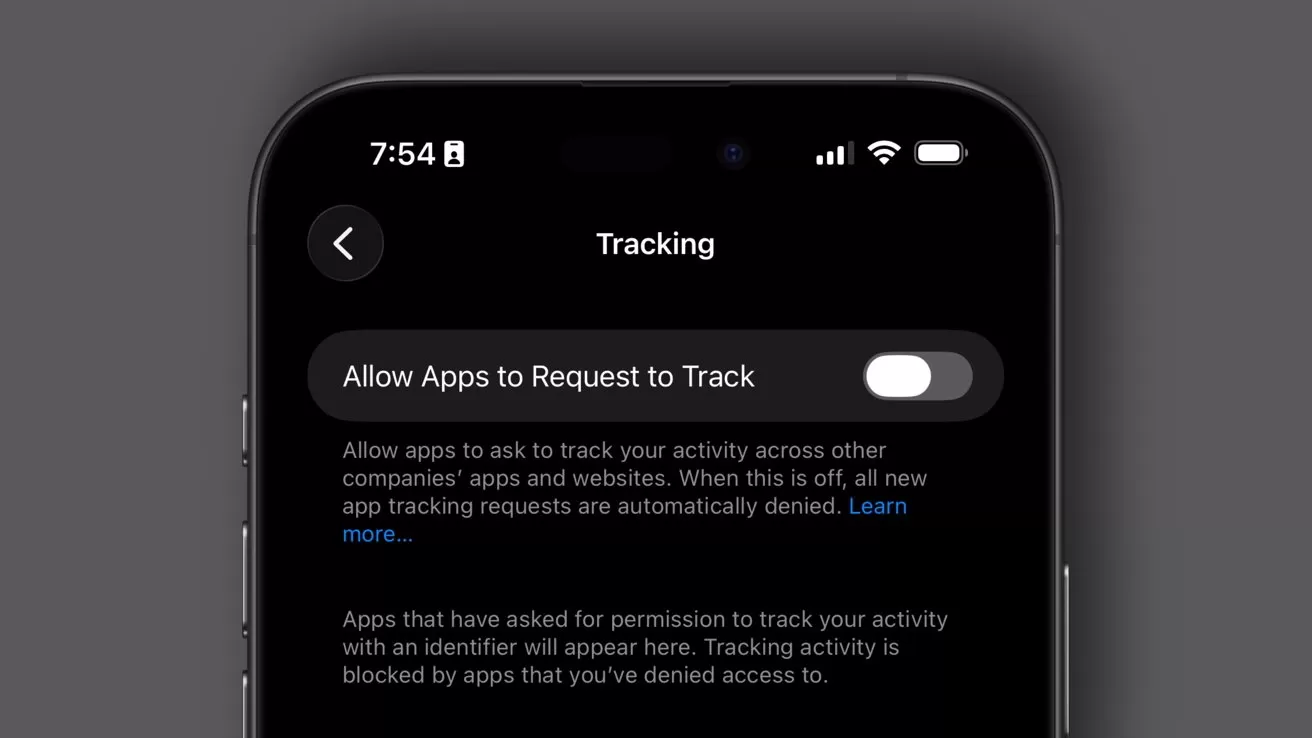
Having rejected Apple's initial compromise proposals for App Tracking Transparency in the App Store, Germany says it has made a final agreement that will make the system fair to all developers.
Germany's federal cartel office, the Bundeskartellamt, has been challenging Apple over its App Tracking Transparency (ATT) feature. This is the feature that requires users to confirm they allow data tracking by developers, and which is seen as favoring Apple's own apps.
Apple has previously offered a compromise that chiefly consisted of rewording the warning dialogs displayed when a third-party app is first launched. That compromise was rejected but now the regulator says that it has agreed binding commitments with Apple and has concluded its case.
"Apple is allowed to provide for a level of protection for its users that exceeds the minimum legal requirements," said Andreas Mundt, President of the Bundeskartellamt in a statement. "However, if Apple sets up additional rules within its ecosystem for the use of data, these rules must, under Germany's special abuse provision for large digital companies, not treat its own offerings better than those of its competitors."
"This is precisely where our competition concerns arose," continued Mundt. "Apple will now align the consent requests much more closely and give third-party app providers more freedom to combine the necessary requests in a sensible way."
What happens next
Apple now has four months to implement the agreed changes to how ATT works. Those changes are binding commitments that the regulator says run for the next seven years, and will be monitored by a trustee.
It's not clear exactly what Apple has agreed to that is different to its compromise offerings, however. The new rules are again specifically about the wording of dialogs shown to users.
According to the regulator, the specifics of its ruling are that "Apple will align the consent prompts for its own offerings and for third-party apps much more closely. "
That means "removing possibly discouraging symbols and wording in Apple's predefined requests for third-party providers." These prompts must always now be "neutral in terms of content, wording and layout."
The clearest difference is that developers will be allowed to add more detail about their proposed use of data tracking.
Apple does definitely use ATT to discourage users from granting permission for third-party apps to track them. It also does not do that with its own apps, but the company has previously argued that this is because none of its apps even attempt to track users.