
Apple's new A20 Pro processor isn't being cranked out as fast as it could be because of RAM shortages, and that is reportedly slowing assembly of the iPhone 18 Pro, and the folding iPhone. That's not great.
The fact that there's a RAM crisis and supply problem isn't a new revelation. What is, however, is the fact that in Apple's and TSMC's most complex processor, that uses a new manufacturing technique, RAM supply may be gumming up the works.
The A20 Pro processor is the first chip to be manufactured using TSMC's N2 node. As part of chip packaging, the RAM for the chip from Apple's regular suppliers is integrated with TSMC's new Wafer-Level Multi-Chip Module (WLMCM) technology.
In the past, TSMC has been the reason for slower-than-expected chip delivery. That's not the case this time, it's all about the RAM.
Analyst Tim Culpan has been told that A20 Pro yields are good, and quality control isn't an issue. He also says that A20 Pro chips are sitting, unfinished, awaiting RAM supplies.
This is not a case where the iPhone can be mostly assembled, and RAM soldered in after the fact and the back or screen slapped on. More than ever before, the A20 Pro is a completely integrated system-on-a-chip. The RAM is co-packaged at the wafer level via TSMC's WLMCM process, making post-CPU packaging RAM-cramming impossible.
Without A20 Pro chips, motherboards cannot be assembled. And if motherboards can't be assembled, that's a major problem for follow-on orders after initial batch delivery.
Sitting, unassembled
Apple's regular motherboard assemblers are Foxconn and China's BYD. At both manufacturers, the report claims that about $1 billion in A20 chips sit, half-packaged, awaiting RAM.
The same sources say that initial orders for launch day will be fulfilled, and no launch delay is expected. But, like almost always, delays in delivery times start nearly immediately. They are probably going to get longer, faster, assuming that the shock of the price of the device isn't a major deterrent.
This may be another reason why Apple has been rumored, since about the start of the RAM crisis, to be putting off the iPhone 18 not-Pro until spring 2027. Spreading out assembly, and therefore RAM demand, may make more sense than trying to do it all in a supply-constrained environment.
No short-term relief
We do not have the same supply chain sources that Culpan has, but we believe this report to be accurate. The churn on sources in China for us over the years has been incredibly high, so good on him for being able to maintain that.
We do know that just about everything Apple makes, including the incredibly popular MacBook Air, is constrained. Wait times for nearly everything are lengthening if you can't find one on the shelf, and that's mostly not because of imminent upgrades.
This all comes down to RAM supplies and cost, with SSD shortages and cost increases there coming into play as well.
And, like I said in some depth on Wednesday, there is no sign that will lighten up any time soon. News came out on Thursday, that US-banned CXMT denied Apple's Hail Mary attempt to try to get less expensive RAM.
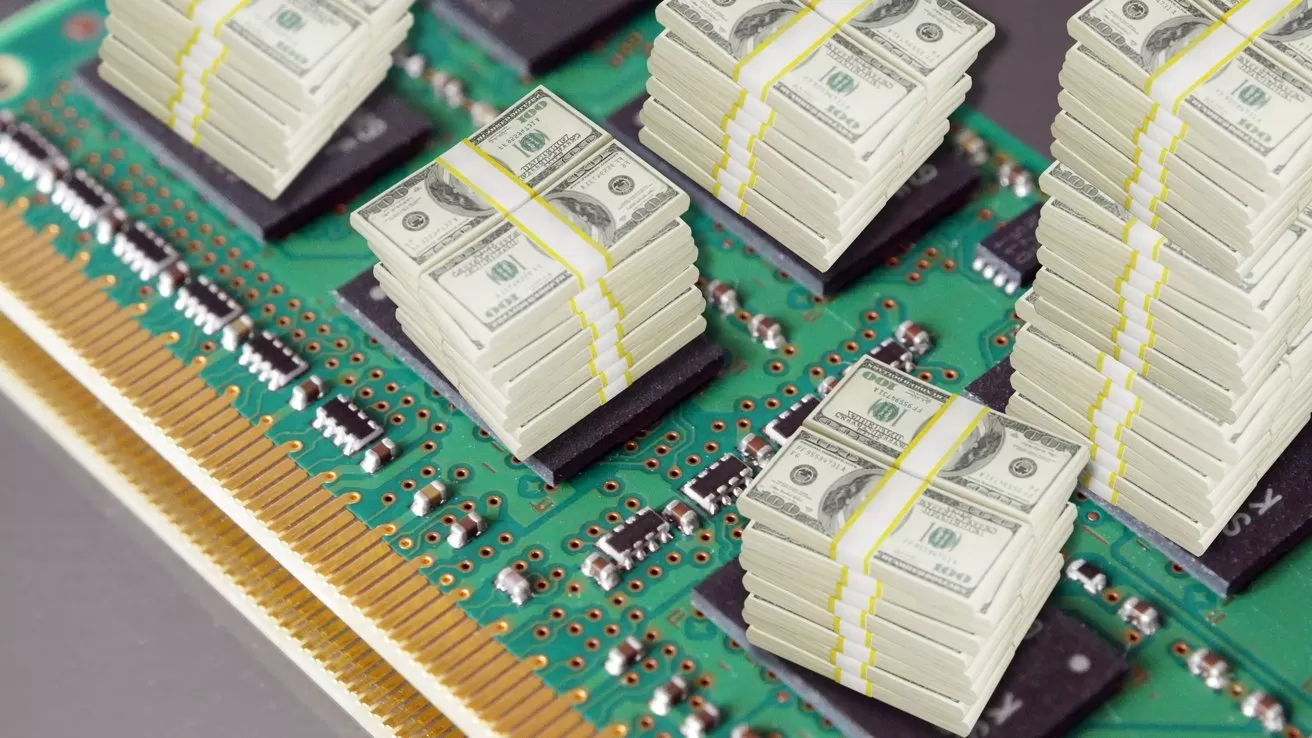
This is what it feels like buying RAM these days.
Apple could buy the chips solely for the Chinese market, to try and lighten the pressure on overall global supply. But, the feds don't even want Apple to do that.
In a letter sent at the end of July, senators expressed concern about the idea.
"The limitation that CXMT memory would, for the moment, be confined to devices sold in China cannot be expected to hold, because once a part clears qualification for Apple production, extending it worldwide is a single procurement decision away," the Senators said in the letter. "The precedent Apple would set by addressing the memory shortage this way would shape the memory market and this country's security for years after supply has returned to normal, and we urge you to weigh that carefully."
It remains to be seen how that will play out.
Multiple levers, but slow to move, and everybody is moving them
Pricing is the most fluid thing about product design. There is obviously a floor to consumer pricing, based on what a company needs to make based on the bill of materials coupled with the profit that shareholders demand.
A price ceiling depends on the consumers. Apple has always charged a premium, and commands a significant percentage of the smartphone profit, with a disproportionately low percentage of shipments, globally.
We still don't think a $300 price hike for the iPhone 18 Pro versus the iPhone 17 Pro launch price is likely. In 2026 at least.
It seems inevitable to happen during the iPhone 18 Pro's first-year lifetime in 2027 though.
I've often said that Apple has the money to wait for anything. They do, they have time to wait for a service like Apple TV+ to be a success.
They can't buy what doesn't exist. RAM suppliers are making HBM for server farms because they make significantly more money doing that than DRAM for consumer devices, and there is finite foundry capacity.
Spinning up more foundries takes time. Best-guesses for new foundries coming on line with enough production to help is three years for ones not in the US, and five or more inside the US.
The longer this wears on, the worse pricing is going to get across the board. Everything these days needs RAM. Micron said that total car memory in 2023 was about 90 GB of RAM and NAND, both under pressure.
In 2026, that has jumped to about 278GB, and that's not even including self-driving car requirements, which can hit 300GB of just RAM, and 2TB of SSD storage. This is why Elon Musk wants to build his own foundry.
If this pressure keeps up, maybe getting in early on those iPhone 18 Pro and folding iPhone orders is wise. I certainly don't regret my $399 Microcenter Mac mini purchase last year. I do regret not getting my kids MacBook Neos when they launched.