Shockwaves from the global RAM and SSD crisis continue to echo through home electronics pricing, and RAM manufacturers are reaping massive profits. A fix is coming, but it is a long time away and may not make any difference at all to consumers.
It's been a long time since RAM pricing at retail has been something that we've needed to keep an eye on. We still don't need to track sales on DIMM sticks, given how Apple sells and packages RAM on the chip. What you buy initially is what you will end with.
But it is a good bellwether of where the industry stands.
DDR-5 DRAM prices have very nearly sextupled on average on the consumer side. In February 2025, two 16GB sticks of DDR5-6000 RAM sold for about $100. Present pricing is around $600. Ouch.
SSDs and hard drives have also seen increases. Hard drives have about doubled in price. Consumer SSDs command about three times more than what they cost in February 2025.
Apple doesn't buy RAM sticks since the Intel Mac Pro was being manufactured. They still buy RAM and SSD flash cells, though.
While prior deals mean that Apple was insulated for longer, they are getting hit now by industry trends. July's price hikes are the best indicator of that. I very nearly guarantee that the iPhone 18 Pro will be more expensive than the iPhone 17 Pro was at launch.
I think the predicted $300 increase is too much, but I wouldn't be surprised by a $200 one.
A lot has changed since we wrote about this in February. It's gotten worse, not better. Here's how this all started, how it's gotten worse, and how it will get worse yet for the next few years.
AI Wars
There's not a lot to say about SSD flash media and hard drives. While final packaging and interfaces differ between AI data centers and consumer storage, it's all pulled from the same pool. When manufacturers can catch up with production driven by the massive demand, the market will settle overall.
There's no real recovery happening in 2026 on hard drives or flash media, thanks to the AI boom and data center demand. It's coming, though.
The storage manufacturers are all saying there will be normalization at some point in 2027 or very early 2028. What that means for pricing exactly isn't clear.
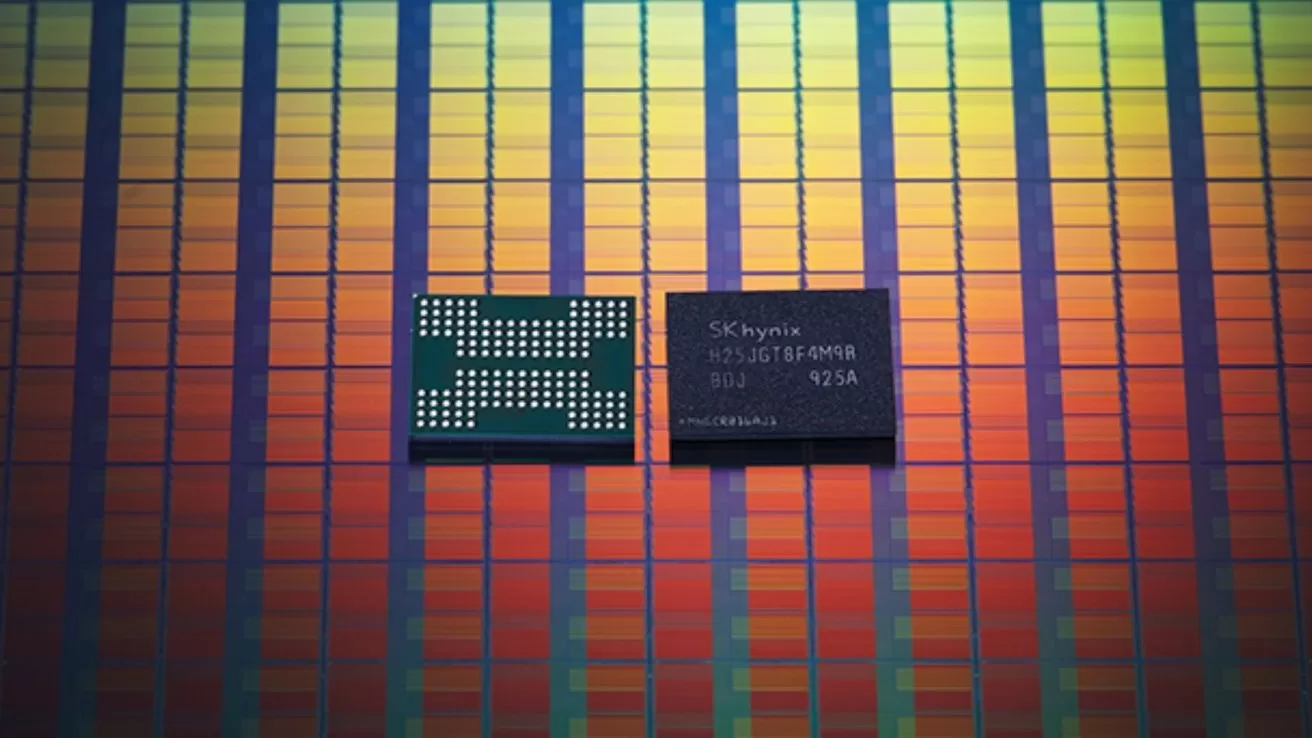
Memory is in short supply globally — Image credit: Apple supplier SK Hynix
And then there's RAM. That's where things are bad and getting worse. The entire production capacity for 2027 is already sold.
Compounding the problem is the fact that all RAM is not the same. We don't need to focus on the speed of RAM here, as that's not really that relevant to the shortages.
We do need to talk about the two general marketing categories of RAM at play here — High Bandwidth Memory (HBM) and dynamic random access memory (DRAM).
HBM versus DRAM
RAM silicon is about the same for the most part. What's different is how that silicon is packaged, manufactured, and stacked.
HBM is specialized for data center applications. Instead of a single layer of silicon, HBM stacks multiple dies together. Through-silicon VIAs (TSVs) are the channels through the HBM die stack that allow for massive bandwidth. Consumer DRAM is a single-stack, lacking TSV channels.
Practically, HBM delivers about a terabyte per second speed in a single HBM3 stack. A single DDR5 consumer stick will deliver about 80 gigabytes per second of speed.
All this comes at a literal cost. HBM costs about five times more per gigabyte of storage than DRAM does. As such, HBM and the gold rush for that is pushing demand.
Like Apple, RAM manufacturers are not charities. They want the most money from their investment possible. Packaging more RAM as HBM makes them more money from data center and AI demands, and keeps commodity costs up.
There is, of course, a fine balance to be struck between rising costs, maximum production capacity, and purchaser demand. That balance is all out of whack right now, with data centers consuming just about everything that is produced, and still wanting more.
What Apple's RAM suppliers are saying
RAM manufacturers are reaping massive rewards from this situation. Record profits are being earned, and they are selling out everything that they can make, in gross contrast to just a few years ago when there was a glut of RAM on the market.
Apple buys RAM from three main suppliers — Micron, Samsung, and SK Hynix.
"Even as we expect industry supply to improve gradually in 2028, we currently do not have line of sight as to when memory supply will be able to catch up with increasing demand," Micron CEO Sanjay Mehrotra said. "AI is driving the demand, and that's where the value of memory is really high because it enables the performance of AI."
Mehrotra is clear on the trajectory of the current supply and demand imbalance.
"Despite our best efforts to accelerate bringing up supply here, as well as globally, the demand continues to build up, and we do not see when supply catches up with demand," Mehrotra said.
Samsung's executive vice president of memory, Jaejune Kim, is a bit more granular on how bad the situation is. He made his point clear in Samsung's recent earnings report.
"We believe [the RAM market] will be unlikely to see any significant increase in incremental supply through 2028, he said in Samsung's earnings report conference call. "Based on the incoming requests that we have been seeing from the customers, unmet demand from this year is likely to carry over into the following year, contributing to tight — tighter supply conditions going forward."
"The supply constraints are expected to become even more severe in 2027 than 2026, reinforcing our view that the supply shortage will persist through 2028," he added.
SK Hynix CEO Kwak Noh-jung also doesn't see an end any time soon.
"We forecast that next year will be the worst year in the industry's history from the supply perspective," he said. "We still forecast that customer demand will remain higher than our supply capacity even beyond 2030, but we are doing our best to solve the problem."
Demand isn't going to fall, capacity has to increase
Obviously, RAM manufacturers have their own best interests at heart. This trio has been sued multiple times collectively and individually over RAM price fixing in the past.
Expanding foundries has not been in their best interest before. It is now, though, but it's not an instant fix.
It takes about three years to increase capacity with a new foundry, internationally. This process is estimated to take about five years from start to finish in the US, given a different regulatory and financial climate.
And, also given the glut of RAM just 24 months ago, there was nothing planned. This has changed, and all three of Apple's manufacturers have expansions in the works now.
What Apple is saying, and doing
Beyond the RAM suppliers, Tim Cook has a lot to say on the matter as well. During the latest earnings call, his last, Cook said that the RAM market was a "hundred-year flood on the memory pricing."
Upcoming CEO John Ternus has not gone on record yet about RAM pricing. We're not expecting great philosophical changes from Ternus versus Cook's approach in the short term regarding the matter.
Apple is seeking supply from RAM vendor CXMT. The Chinese company is the fourth-largest RAM supplier in the world, making about 11% of the world's supply.
It is also heavily supported by the Chinese government. In the last decade, the company saw losses totaling $5.4 billion and was buttressed by the government with cheap land and subsidies.
The current RAM crisis is helping the company, though. In the first quarter of 2026 alone, it hauled in $4.8 billion, and is expected to earn more as the RAM pricing crisis continues.
The main issue with a CXMT buy is that the Pentagon insists the company has links to the People's Liberation Army, and therefore is a national security risk to the United States.
In effect, Apple could buy the memory, but then it would immediately lose a lot of potential and existing lucrative sales of hardware to the U.S. Government. The feds are not able to make purchase agreements with companies either on the list or those who use them as component suppliers.
Tim Cook himself is petitioning the President for an exception. It doesn't seem likely that he'll get it, though, given pushback from lawmakers.
As Apple says, they have other supply chain dials to turn to moderate overall device prices. The magnitude of RAM and SSD price increases, though, is hard to counter.
No future guarantees of anything
No matter how old you are, any adult can look back at an earlier part of their life and see that most prices have increased. There are arguments about inflation, some exceptions like enshittified televisions costing less, and other things just being more expensive, but the trend overall is real.
RAM and storage will be more in supply at some point in our lives; that seems certain. The RAM suppliers don't want to out-price the market, in the wake of industry corrective measures.
We've been talking to developers who say that they're going to make sure that their apps run more efficiently, so they work better on less RAM. Microsoft is optimizing Windows 11 in future updates so that it runs well in an 8GB environment, instead of effectively demanding 16GB.
Too much industry correction, and memory has less demand. Cue commodity price decreases. The suppliers don't want that.
I highly doubt consumer prices hiked under the rampocalypse are going to come down. RAM and SSDs are only two parts of the consumer electronics puzzle.
That, and companies like money.
Time will tell. But it'll take a lot of time, four years or more, to get to that point.