The newly announced Apple Upgrade program brings car-like lease-to-buy options to iPhones, Macs, and more. There's no question, it's great for Apple, but whether it's good for you or not is much harder to decide.
Give that company some credit. When you think of Apple design, you certainly think of hardware and maybe software, but this firm has just shown that it can also design its way out of a hole.
In just a few weeks' time, Apple is certain to launch some new iPhones, which are always high-priced items and never casual purchases. Plus it's expected to launch the most expensive iPhone ever contemplated, with the iPhone Fold rumored to start at over $2,000.
Apple is known for costly devices, but there are limits. And that's especially true right now with the global economy as it is, and the worldwide shortage of processors and memory being worse than it ever has.
So given that 2025's iPhone 17 launch was spectacularly successful, perhaps even more so than expected, Apple is coming to its 2026 launch with a tough job. It doesn't have to convince analysts that the 2025 sales were a fluke, because analysts will rubbish 2026's sales figures regardless.
But Apple does have to prove to us that it is worth upgrading and this time, that is a harder sell because of the economic situation and because of how good the 2025 iPhones still are. Apple may be able to make the iPhone 18 Pro range significantly better, that's definitely within its capabilities, but today it cannot make a $1,000 or $2,000 iPhone seem like a bargain.
Except maybe it can have a good go, because of this new Apple Upgrade program. Just as with some car programs, you can lease an Apple device and then return it, upgrade it, or keep it.
This has probably been in the works for years. It's a clear development of both the old iPhone Upgrade Program and the more recent one for Macs.
Whenever Apple started work on this, and we think it's soon, it's coming at exactly the best time, financially, for the company.
The program means that Apple can release a $2,000 or higher iPhone Fold, but buyers can get it for a dramatically less upfront cost.

So this is why Apple thinks it can sell a $2,000 or more iPhone Fold - image credit: AppleInsider
It's still the same $2,000, and quite possibly more. Especially since Apple has separated out its AppleCare insurance, making it a second purchase instead of including it as was done with the iPhone Upgrade Program.
Even so, being able to slap something like a $50 or $100 monthly price tag on the newest and greatest iPhone is a big and great deal, even if it comes with footnotes.
No question, it comes with footnotes, including Apple's ability to restrict your use of your device should you fail to make a payment. This might extend to the carriers too, but as it is as-yet unreleased, time will tell.
It will not extend to third-party resellers like Amazon. Resellers can and periodically do run discounts and sales on Macs, for instance, but under Apple Upgrade you are leasing with calculations based on the full retail price.
But this program might protect Apple's 2027 finances given the modern realities of manufacturing, plus RAM and SSD pricing. And it may do so by how the company has really cleverly designed its way around a problem that seemed insurmountable.
That's nice for them
Back in the 1990s, it used to be that you genuinely had to worry about Apple because it could easily have gone under. That hasn't been the case for decades now.
Even if Apple had a bad year for iPhone sales, it's certainly not doomed. And certainly not because analysts are going to say that it had a bad year for iPhone sales.
So given that Apple will make it through these tricky times, the real question concerns whether its clever design is good for you as well as the company.
It definitely is not if it tempts you to buy an iPhone Fold or any Apple device that is more than you can afford. That will happen, people will get hooked into debt like they are now, and it will just be debt through Klarna/Apple instead of the carriers.
There will also be people who buy an iPhone, a Mac, an iPad, and maybe even more because of this radically lower initial cost. The potential debt someone could get into is scary.
But then as long as the finances work for that someone, this is a way to get all of those devices when they couldn't before. This is a way to benefit from new devices, and if the monthly price is right, and if those benefits are actually worthwhile, then Apple Upgrade is an opportunity.
Plus Apple Upgrade may be new, but the iPhone Upgrade Program isn't, so there are many who are already paying monthly for their devices. That isn't a lease, it's a loan, but still if you're already on such a program, you're also already used to this idea of choosing between keeping the device or upgrading it next year.
Then beyond Apple's program, there are still partner financing ones across the world. Monthly payments are far from new, and there are people already paying this way who might now get a better deal with Apple Upgrade.
It comes down to how all debt is a risk that must be calculated and considered. That even extends to Apple itself, although it's again chosen a clever way to maximize its income while minimizing risk.
Apple's risk exposure
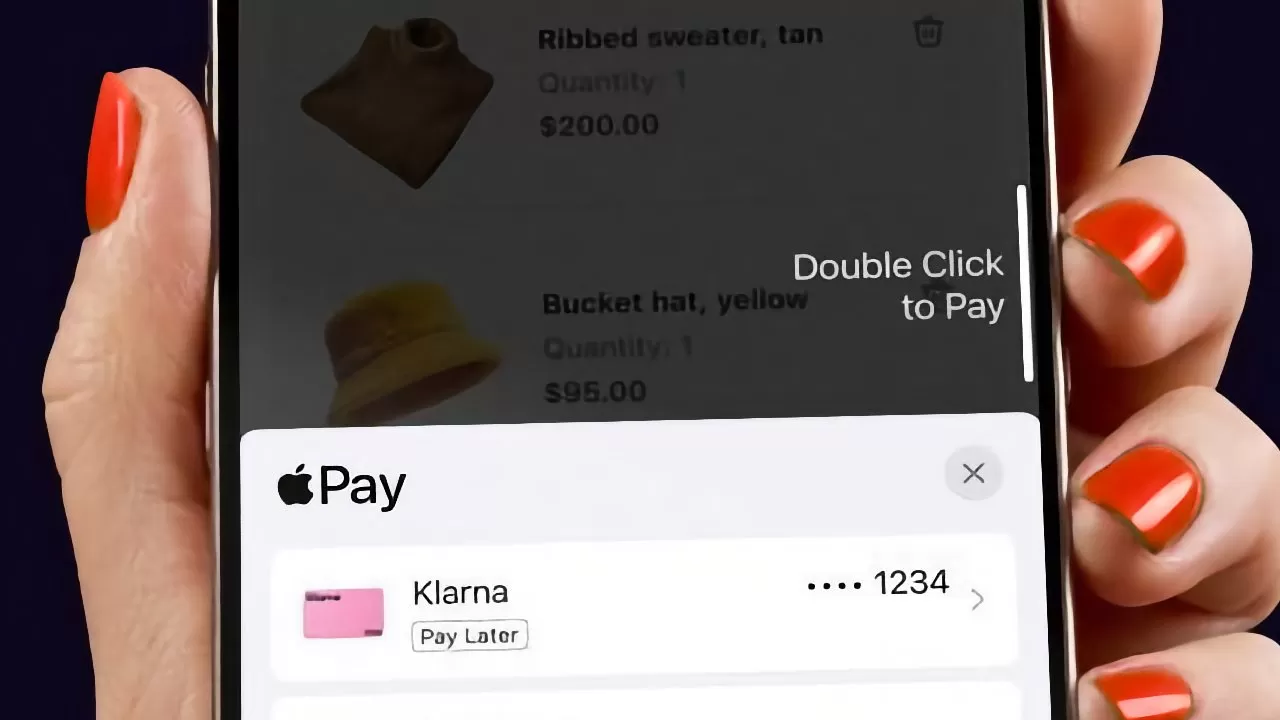
As Apple will have learned from Apple Card defaulters, there is always a risk in extending credit to people. That would be why it has chosen to partner with Klarna.
This is a financing firm best known for its Buy Now Pay Later (BNPL) programs. Apple tried its own BNPL program with Apple Pay Later, which was a smart name, but the company shut it down after about a year.
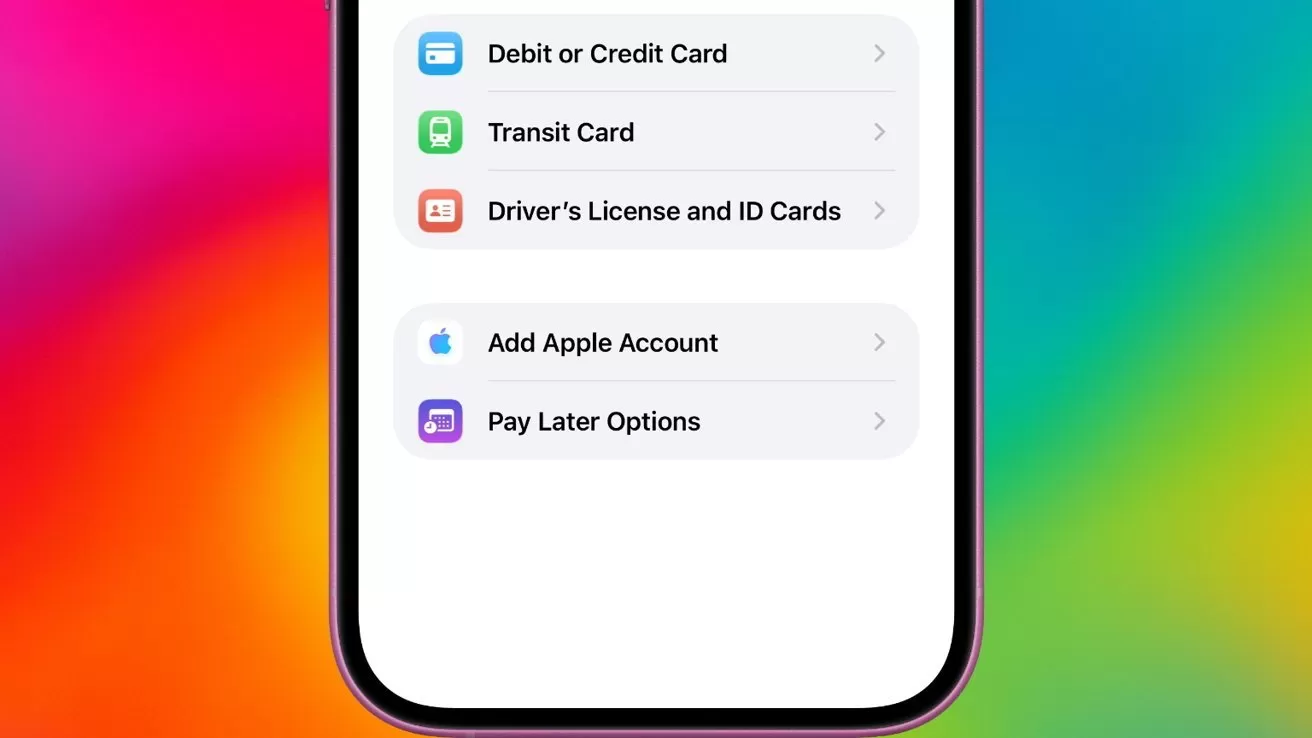
Apple had, and then dropped, its own Buy Now Pay Later program.
It's not known why Apple closed the program, especially as it is known that letting buyers spread costs over six weeks this way was a success. Doubtlessly, Apple ran the numbers and they didn't work then, but using Klarna does now.
Funneling this through a third-party firm means that Apple is likely to have insulated itself against as much of the risk as it can.
So Apple has considered every angle, for certain. It has mitigated risks, it has finely calculated every inch of the Apple Upgrade program.
As long as users do the same thing, Apple Upgrade could be good for them. But it is going to tempt some people into debt they can't service.
In some ways, that sounds so very un-Apple-like. But then the company has always priced its products at a carefully worked-out premium.
And if Steve Jobs could have had his way in the 2000s, the version of Apple Card he wanted would have accepted anyone who applied. Arguably Apple Card now has over-extended a bit, given how Goldman Sachs is bleeding cash from consumer lending including the Apple Card.
Maybe there's an idealistic world where that fits the original hippy nature of Apple, but it would have been a road to far greater financial hardship than the Apple Upgrade program.