OpenAI continues to churn out upgrades to its various GPT models, the latest GPT-5.6 promises to be more succinct and provide confident wrong answers less often. Here's what's new.
Apple and OpenAI have a relationship where ChatGPT is an extension for the previous version of Siri, though that could come to an end soon. The latest updates don't affect users of that specific function, but the Mac utilities and iOS app will gain new features and performance.
Now, we're going to have to sift through OpenAI's anthropomorphized language of its chatbot models to understand exactly what's being introduced here. The press release says a lot about "thinking" versus instant answers, but always remember: artificial intelligence can't think, reason, understand, or sympathize.
GPT-5.6 Sol appears to be a release hoping to address several concerns brought up by users of ChatGPT. They often complain it uses too many filler words, takes too long to get to the point, and provides affirming answers even when the user is wrong.
ChatGPT caveman
According to the release, GPT-5.6 Sol provides "more focused answers, adapts its level of detail to the question, avoids unnecessary formatting, and offers a helpful correction when simply agreeing wouldn't be useful." These problems have become so well known and bothersome users have turned to skills like "caveman" to force ChatGPT to be brief and direct.
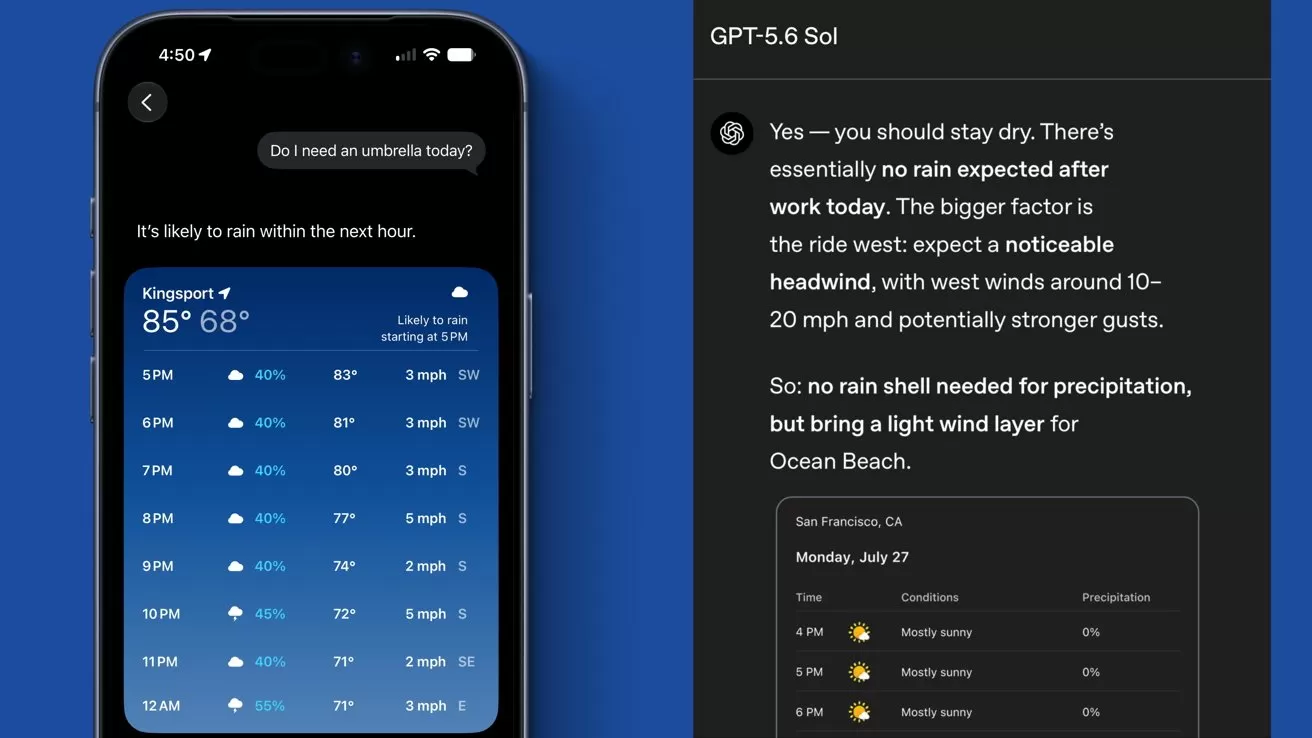
SiriAI gets to the point, while OpenAI does shows some restraint
The example provided by OpenAI looks incredibly similar to what a user might see when using Siri AI. A brief summary of a weather result with a weather widget is shown instead of a wall of text padded with filler.
Incredibly, the release mentions "more reliable facts." Hallucinations are a part of AI no matter how many guardrails are introduced, so it'll be interesting to see if OpenAI has actually accomplished this in a meaningful way.
For example, Siri AI tends to avoid hallucinations by not summarizing content when possible. When you ask a question, the source is quoted and linked directly, which ensures random incorrect information isn't inserted. Of course, that's only if the answer is correct in the first place.
While AI tools can be used for research, AppleInsider strongly urges users to avoid any AI-generated content from appearing in a finished work. Lawyers, doctors, and financial advisors have encountered horrific problems when relying too heavily on AI to perform their work.
No amount of promises and fixes from OpenAI will create a foolproof AI tool.
A "Think" button
If you've used Siri AI, you might notice that the same question can sometimes produce very different results in terms of detail. That's because on-device models are much smaller and seek an end result that is much less computationally expensive versus server-side models.
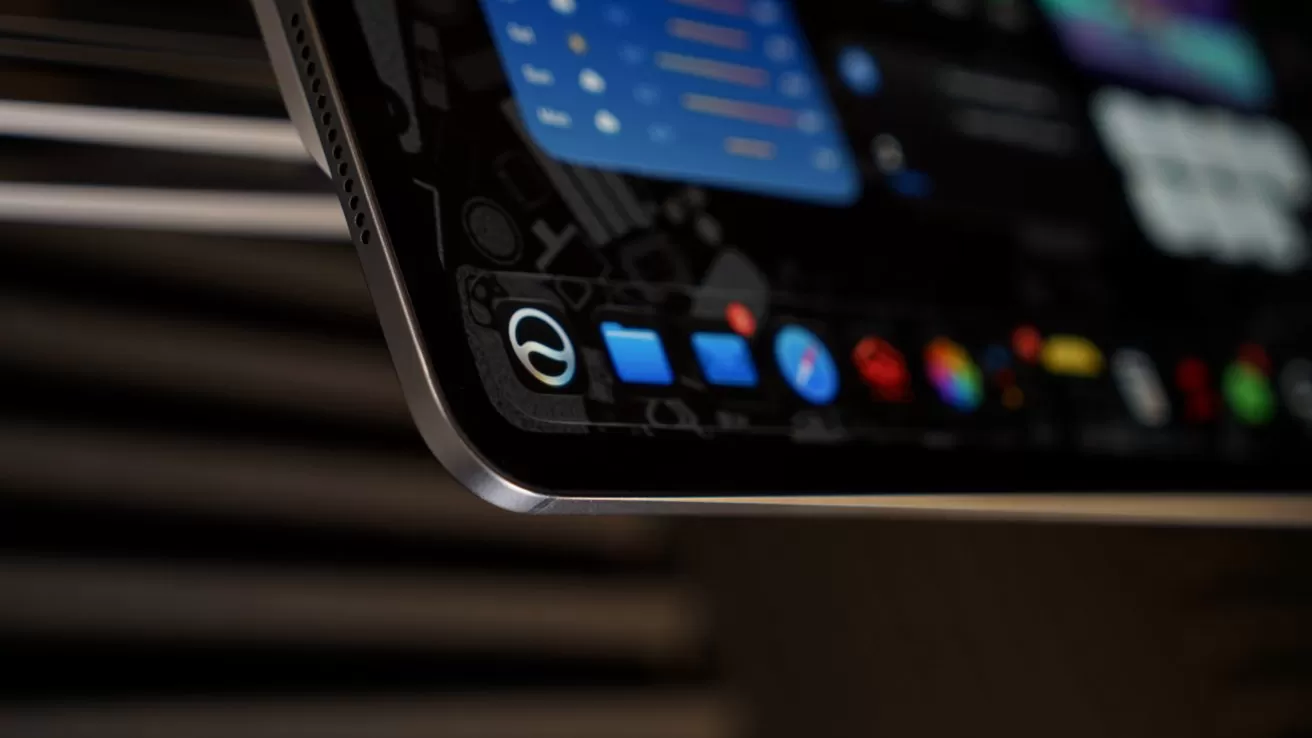
Apple and ChatGPT have similar ideas on how to approach AI chatbots
Apply that same idea to ChatGPT "Thinking" and Instant modes, and you'll understand what's happening. Previously, these two models would be so different that the answers would vary wildly in tone or style.
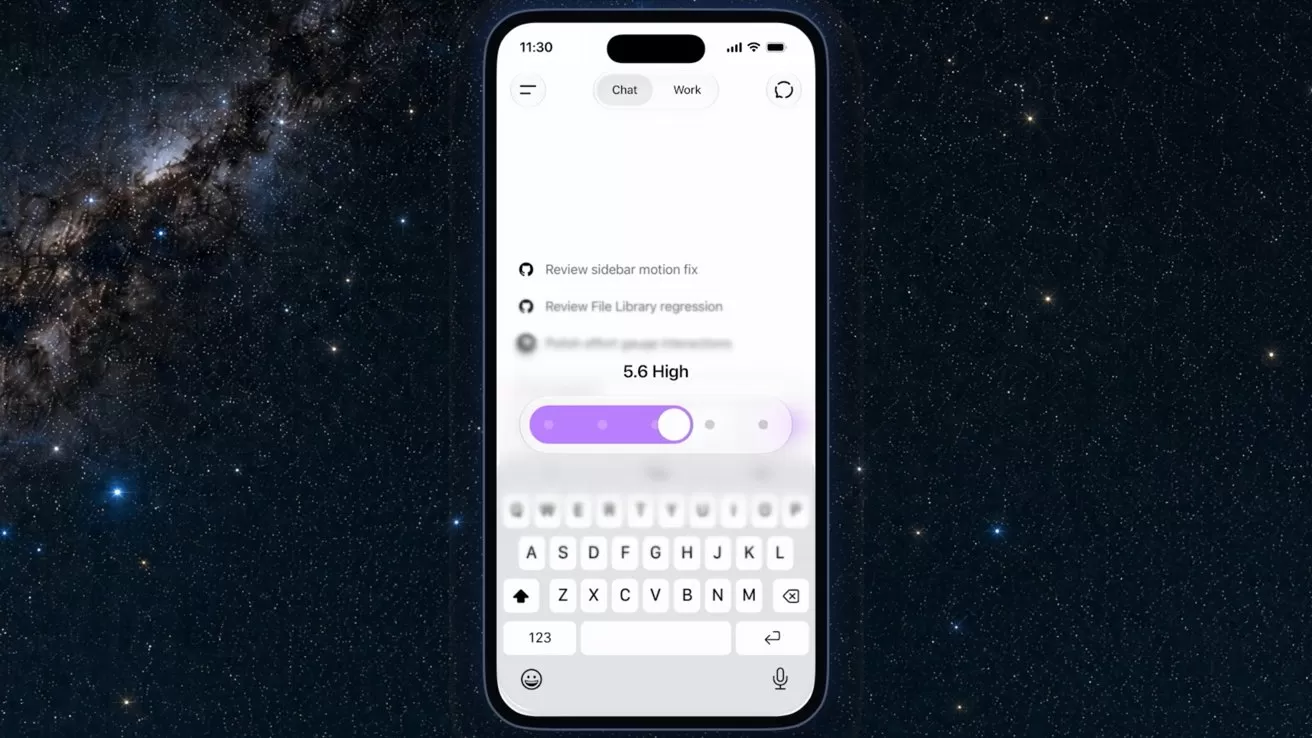
The names say what they do: Thinking takes longer with a heavier model while Instant is fast with a smaller model. There's also a new "thought" slider.
This terrible naming convention is yet another attempt to humanize the chatbots, but basically, think of it as a compute slider. Lower means less compute, faster results, while higher means more compute, longer, more detailed results.
Obviously, OpenAI hopes users will change the slider for more simple queries that don't need a lot of information resources. It's computationally less expensive, uses less tokens on input, and likely means less tokens on output.
That's likely going to be useful for private ChatGPT use, but corporate users never bother. Research shows that OpenAI's most expensive ChatGPT users are in an office, choosing the most complex GPT version available, and doing so to convert a PDF into a slideshow.
It's wasteful and expensive, especially for OpenAI, which is likely giving that compute time away at a bargain. Sliders would be helpful for the company that can't turn a profit, but not if users just ignore them.
Free GPT
Free users are also getting an upgrade as everyone will default to GPT-5.6 Luna and gain a "Think" button for questions users believe are harder.
AI is a tool that is now easily found on your iPhone, which is a problem for OpenAI
Analyzing such an update can provide interesting insight into OpenAI. It's priorities as a company providing AI to the masses while developing a HomePod that can wiggle is interesting. Especially given the Apple lawsuit.
One of the biggest reasons why OpenAI has such a large valuation is because it released a powerful technology and essentially gave it away for free. Like Spotify, the free use of this technology is draining the company and all that keeps them afloat are whales and investors.
The AI bubble is teetering on collapse, or is at least deflating, even as consumers tire of AI as a concept. It isn't clear if OpenAI will find its footing before it runs out of cash sometime in 2028, or if everything comes crashing down around it.
As an Apple fan, the whole thing is a train wreck observed in real time. Sure, it took two years for Apple to find the right path forward with AI and execute that plan, but it spent pennies on that compared to its competitors.