
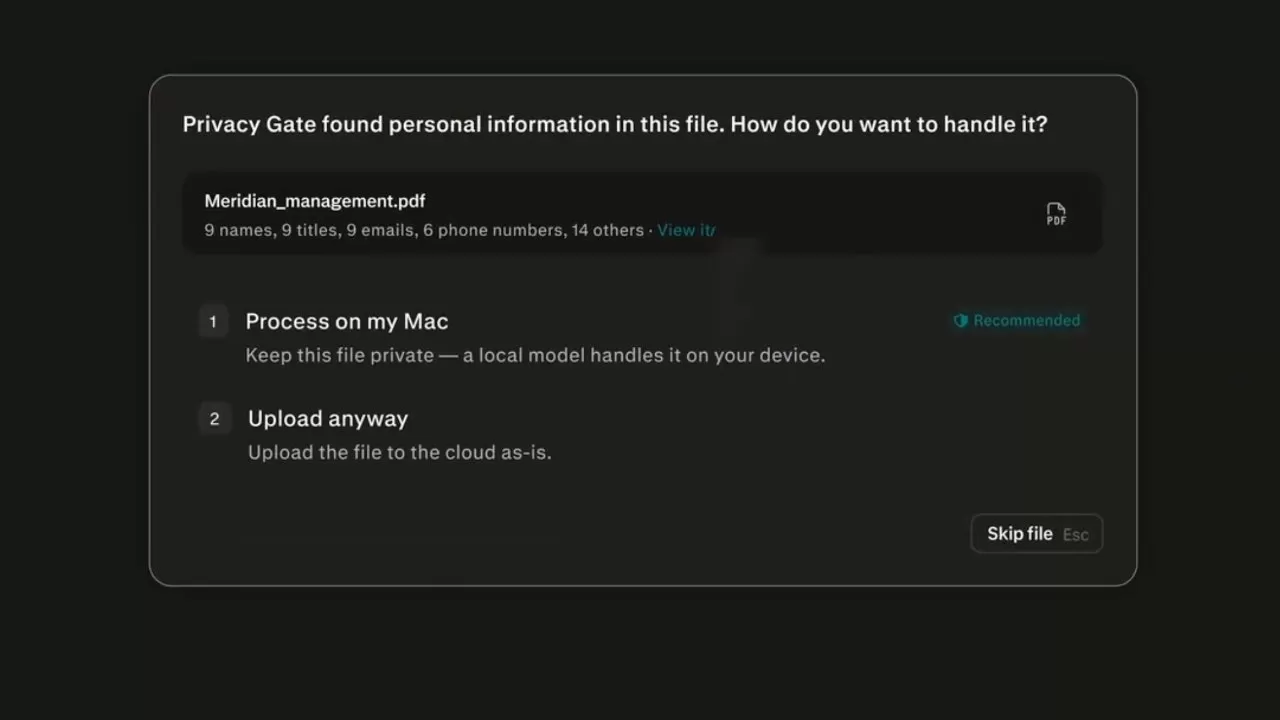
Perplexity has launched what it calls hybrid compute for its Mac app, meaning that it should automatically detect sensitive information and processes it locally while the rest of a user's task benefits from cloud computing.
Following the company's March 2026 announcement that its app can control other Mac apps, Perplexity has launched an update that it says gives users privacy and performance. Hybrid Compute sees the Perplexity Mac app determine for itself what constitutes personal information, and it automatically routes that to on-device AI processing.
Introducing hybrid compute in Perplexity Computer.
— Perplexity (@perplexity_ai) September 1, 2026
Computer can start a task in the cloud, then move to a local model that runs on your Mac. Use it for steps involving private files or sensitive data.
Available today in the Perplexity Mac app. pic.twitter.com/bafirGWgwA
In a fuller blog post announcing the update, Perplexity explains that this means users can elect to let it split tasks automatically. Non-private information can use the cloud and so larger, more powerful LLMs.
"Hybrid compute lets a user work with Al on data that should never leave their device by dividing each task between the cloud and a local model on their Mac," said the company. "A privacy gate on the Mac controls what may leave the machine."
"Before information from a protected file reaches the cloud, the privacy gate can mask sensitive details, keep it local, refuse the action, or ask for consent," it continues.
The thread on Twitter/X shows how users can turn on hybrid computing and then select from whatever local or cloud LLMs they have. When they subsequently enter a prompt, Perplexity will scan the information it's being asked to work on.
If that information includes anything the app designates as private, it asks the user what to do. The options are to keep those elements private on device, or let it go through to the cloud regardless.
It comes down to trust
Perplexity works by sending AI requests to different services, so it is used to routing whole tasks to different places and managing the response. This hybrid approach, though, can only work if Perplexity gets it right when it determines what is personal information, and then if it really does split the task.
The company has introduced what it calls PII-TRACE (Tracing Recurring PII Across Conversational Exchanges), or "a new benchmark for evaluating personally identifiable information (PII) detectors." In an effort to demonstrate trustworthiness, Perplexity has made this code open source.
However, Perplexity originally positioned itself as the ethical AI tool, and proved to be anything but. Its stance on being caught out stealing data was indefensible, not to say also ludicrous, and so hardly that of a company to be trusted.
Consequently, AppleInsider strongly advises against using Perplexity's new hybrid computing without considerable testing and research first. We'll be looking into it more after the iPhone 18 Pro event.