Hundreds of private, personal, and sometimes slightly disturbing prompts and chats made with Claude.AI surfaced online through nothing more than a search.
This isn't like the way Claude Cowork recently escaped its sandbox and went through users' files, and it also isn't still a problem. At time of writing, all signs of this privacy breach have been removed.
But according to Wired, for at least two days, private chats made with Anthropic's Claude were readily available online. It was not possible to zero in on a specific person, but Redditors found that a simple search for "site:claude.ai/share" surfaced hundreds of such chats.
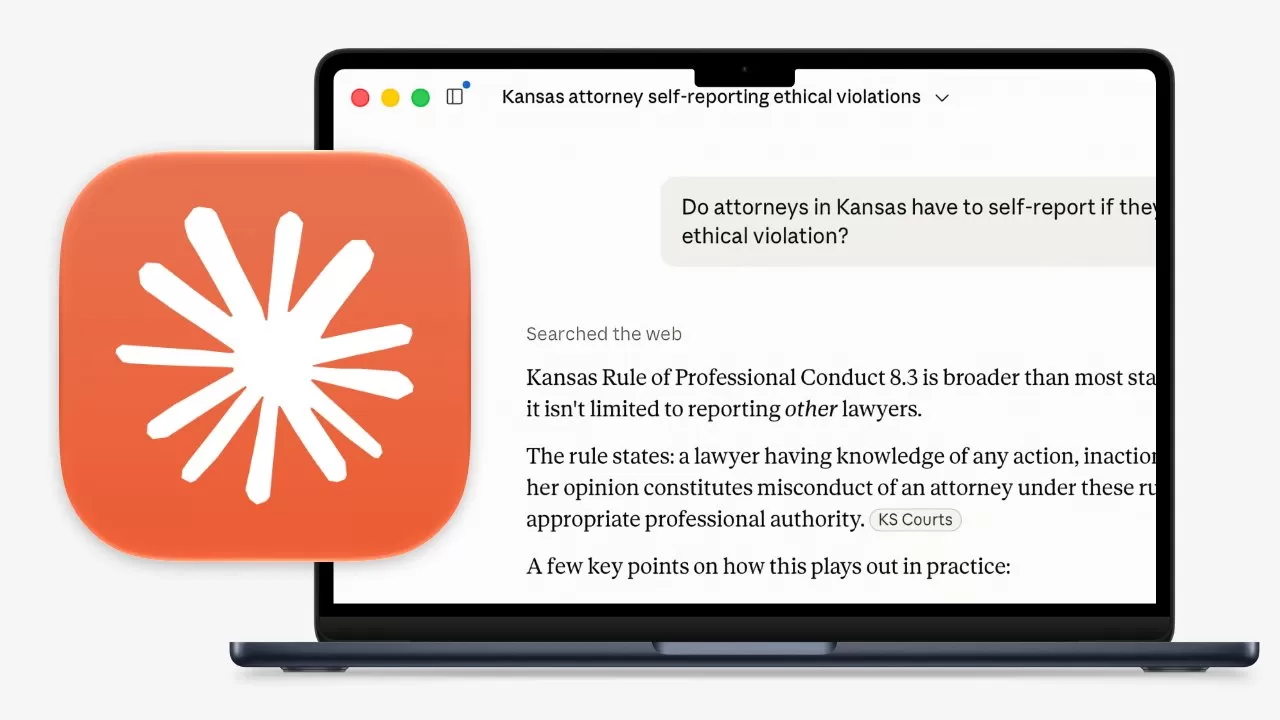
Alongside the inevitable erotica, there were requests for political advice. And someone asked whether attorneys in Kansas are required to turn themselves in after committing an ethical violation.
Quite apart from how sometimes you really do not need AI to tell you that the answer is yes, the question is how this could happen. And the answer is that it happened very simply.
Claude creates a URL for every chat so that a user can elect to share the conversation with others. Hundreds of these URLs were then scraped by both the Google and Bing search engines, even though they shouldn't have been.
Given that these private chats have again vanished, there is a system to protect them and it is working. But the problem came down to the search engines and Anthropic having different approaches to the issue.
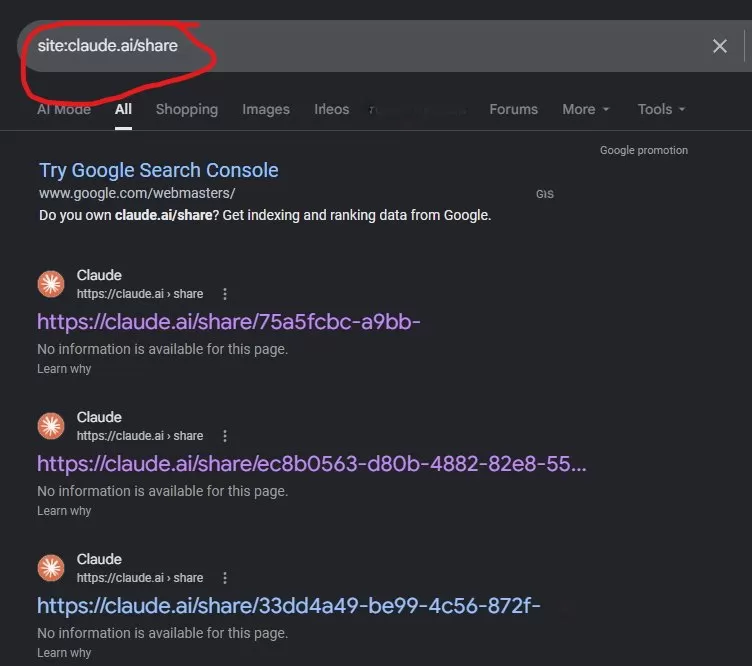
A small sample of resuts. Despite the "no information" lines, each link went to a fully readable private Claude chat - image credit:Reddit
"Neither Google nor any other search engine controls what pages are made public on the web, and these pages were indexed across many search engines," said Google spokesperson Ned Adriance. "We give site owners clear controls to decide whether pages can be crawled or indexed, and we always respect those directives."
Those controls center on two things, the robots.txt file and a "noindex" tag. The former tells a search engine not to index a given part of a site, although that has famously been flouted by AI tools such as Perplexity.
Google itself will decide to totally ignore robots.txt if the page in question is linked to from somewhere else on the internet, and if it does not have the "noindex" tag. The recently exposed Claude chat pages didn't have this tag, so they were indexed and surfaced in searches.
Anthropic has not commented publicly on the issue, nor have any representatives from Bing. Google was the first to block the Claude conversations, but Bing has now followed.
How to protect your Claude chats
If you have the Claude app for Mac or are using it online:
- Go to Claude's Settings
- Click on Privacy
- Choose Shared Chats
- Click on Manage
- Click the "Unshare" trash icon next to any chat
The process is slightly different in the iOS app:
- Go to Claude's Settings
- Choose Shared Links
- Swipe from right to left to reveal a delete button
In both cases, "unshare" and "delete" remove the specific chat from this sharing, but they do not remove it from your personal Claude history.