
Morgan Stanley has pared its Apple price target from $364 to $360 after slowing Services growth and higher memory costs weakened its earnings outlook, despite strong demand for the company's products.
The investment bank kept its Overweight rating on Apple, but analyst Erik Woodring said two of the three factors that usually support the stock are under pressure. Morgan Stanley identified those factors as the iPhone, Services, and gross margins.
The iPhone remains the strongest part of Morgan Stanley's report, seen by AppleInsider. Services growth and margins now appear weaker than the firm expected, however, prompting it to reduce its fiscal 2027 earnings estimate from $10.39 to $10 per share.
Apple reported fiscal third-quarter revenue of $109.4 billion on July 30, up 16% from the previous year. iPhone revenue reached a June-quarter record of $54.3 billion, while Mac revenue climbed 29%.
The company also told analysts that its active installed base and number of customers upgrading devices reached records. Morgan Stanley said the results could indicate that replacement cycles are beginning to shorten after several years of customers holding onto devices for longer.
Services growth is falling below 10%
Apple's Services business generated $30.7 billion during the quarter, up 12% from 2025. Morgan Stanley said the growth rate missed its 14.6% consensus forecast.
The firm expects Services growth to slow to about 9.5% in the September quarter, which would mark the first result below 10% since the June 2023 quarter. Foreign exchange accounts for much of the slowdown, but Morgan Stanley also pointed to weaker App Store performance.
According to the report, Apple cited softer mobile gaming activity, uneven game-release schedules, litigation, and changes to App Store business models in some countries. Management also referred to broader changes in consumer engagement without blaming the weakness on a single factor.
Services gross margin fell from 76.7% in the March quarter to 75.6% in the June quarter. Morgan Stanley said the decline supports its view that the App Store is no longer outperforming the rest of the Services business.
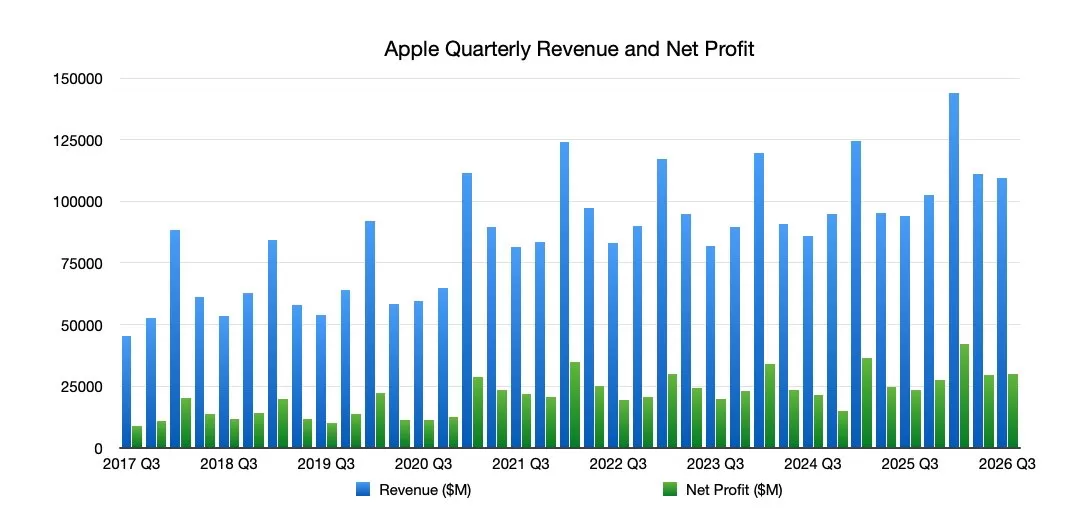 Apple's Services business generated $30.7 billion during the quarter, up 12% from 2025.
The slowdown makes future price increases and the launch of Apple's upgraded Siri more important to the investment case. Morgan Stanley said Apple described internal and developer feedback as overwhelmingly positive, but the company is still evaluating the feature's computing costs and revenue potential.
Apple also suggested that heavier Siri use could create opportunities for higher-tier iCloud+ subscriptions. Morgan Stanley said it hasn't yet seen a clear measurable boost from AI in either product demand or Services revenue.
Memory costs squeeze Apple's margins
Apple guided for a September-quarter gross margin between 47% and 48%. Morgan Stanley estimates that tariff refunds contribute about one percentage point, leaving an underlying midpoint of roughly 46.5%.
Morgan Stanley's estimated underlying gross margin of 46.5% would be about 1.5 percentage points lower than Apple's June-quarter gross margin. The firm said Apple's gross margin has historically remained flat or increased by as much as half a percentage point during the same seasonal transition.
Management told analysts that higher memory costs would account for more than the entire sequential decline. Savings on other components and a more profitable sales mix weren't enough to offset the increase.
Morgan Stanley expects future iPhone price increases and shipments of a foldable iPhone assumed in its model to provide some relief in the December quarter. Neither has been announced by Apple, and the larger question is whether memory inflation will delay a sustained margin recovery into fiscal 2027.
The firm's revised $360 target is based on projected calendar 2027 earnings of $10.30 per share and an unchanged multiple of about 35 times earnings.
Demand is strong, but supply is tight
Apple management also acknowledged constraints affecting advanced 3-nanometer chip production for the iPhone, Mac, and iPad during the September quarter. Morgan Stanley said the problem reflects demand exceeding Apple's earlier forecasts more than a supplier failing to execute.
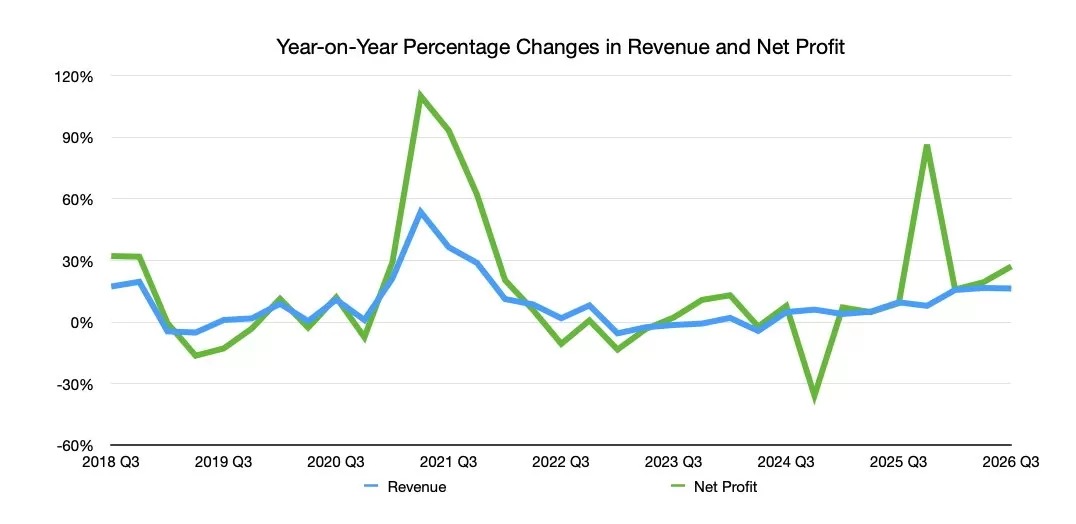 Apple's outlook implies that iPhone revenue will grow in the mid-teens percentage range year over year during the quarter.
Apple also said its supply chain has less flexibility than usual to respond. Channel inventory was lean at the end of the June quarter, and Morgan Stanley expects it to remain tight through September.
Apple's outlook implies that iPhone revenue will grow in the mid-teens percentage range year over year during the quarter. Morgan Stanley believes growth could have been stronger without the component constraints.
The firm's supply-chain checks also indicate that Apple hasn't reduced its production plans for the second half of calendar 2026. Morgan Stanley interprets that as a sign Apple still expects customers to upgrade when its next iPhones arrive, even if higher prices test demand.
Despite its near-term concerns, Morgan Stanley remains positive about Apple's longer-term prospects. The firm pointed to the company's growing installed base, strong cash generation, faster product launches, and potential expansion in AI, health, payments, cloud services, and the home.
Apple shares closed at $333.43 on July 30, leaving room for near-term upside in Morgan Stanley's view. The firm expects the stock to remain under pressure until new iPhones, the upgraded Siri, regulatory approvals, or stronger earnings estimates give investors another reason to buy.